Have you ever looked up at the night sky and wondered, does the moon rotate? The answer is yes, but the mechanics behind its movement are fascinating and complex.
Understanding how our celestial neighbor moves is crucial for grasping broader astronomical concepts. This comprehensive guide explores the science of lunar rotation, the phenomenon of tidal locking, and the gravitational relationship between our planet and its satellite. You will gain actionable insights into tracking moon phases, avoiding common astronomical misconceptions, and mastering the physics of synchronous rotation.
The Short Answer: Does the Moon Rotate?
When you gaze at the night sky, you always see the exact same cratered landscape. This unchanging view often leads people to ask, does the moon rotate? The definitive answer is yes. However, it rotates much slower than our planet.
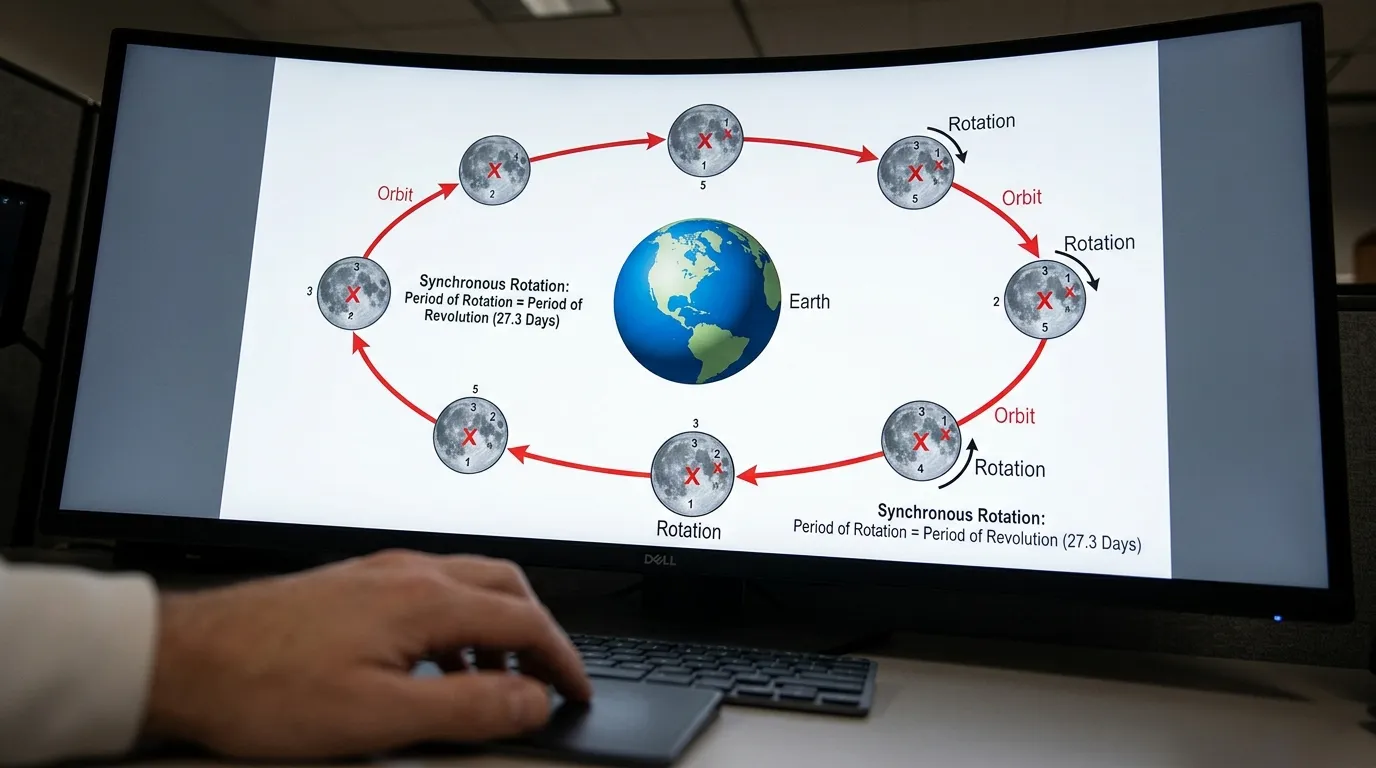
While our world completes a full spin on its axis every 24 hours, our lunar neighbor takes approximately 27.3 days to complete a single spin. Fascinatingly, this is the exact same amount of time it takes to complete one full orbit around our planet. Because these two orbital periods match perfectly, we only ever see one hemisphere.
Understanding Lunar Rotation and Orbital Speed
To truly understand this concept, you have to separate rotation from revolution. Rotation refers to an object spinning on its own internal axis. Revolution refers to an object traveling around a larger external body.
Imagine walking in a circle around a chair while constantly keeping your face pointed toward the chair. To do this, you must slowly turn your body as you walk. By the time you complete one circle around the chair, you will have spun exactly one time. This is precisely how lunar rotation works. If the satellite did not spin on its axis, we would see all of its sides throughout the month as it orbited us.
What is Tidal Locking?
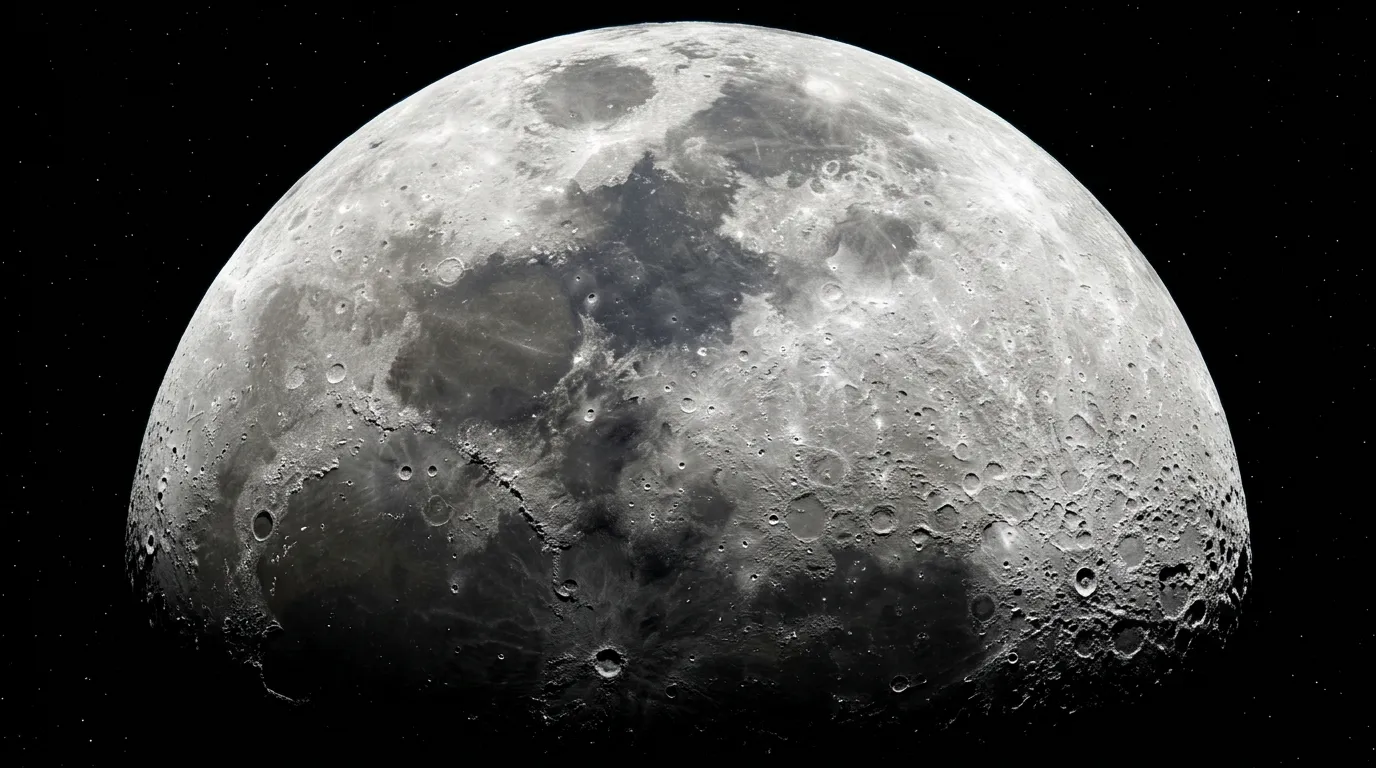
The reason the orbital period matches the rotation period so perfectly is due to a phenomenon known as tidal locking. This is not a coincidence; it is a direct result of the laws of physics operating over billions of years.
The Physics Behind Synchronous Rotation
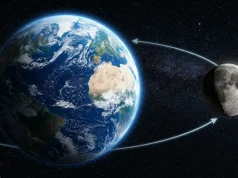
When two celestial bodies orbit one another in close proximity, their gravitational pulls affect each other. The gravity of Earth exerts a massive force on its smaller companion. Over billions of years, this immense gravitational pull created a drag effect.
Early in its history, the satellite spun much faster than it does today. However, the gravitational force stretched the satellite slightly out of a perfect sphere, creating bulges. As it spun, our planet’s gravity pulled on these bulges, acting like a brake. This friction gradually slowed the spinning until the rotation period perfectly matched the orbital period, locking it into place. You can read more about the intricate physics of this gravitational braking on ScienceDirect’s overview of lunar rotation.
Conservation of Angular Momentum
The relationship between our planet and its satellite is governed by the conservation of angular momentum. As the gravity of Earth slows the satellite’s spin, energy is transferred. This transfer causes our planet’s own rotation to slow down by about 1.4 milliseconds every century. Consequently, to conserve total angular momentum, the satellite is slowly drifting away from us at a rate of about 1.48 inches (3.8 centimeters) per year.
The Near Side vs. The Far Side

Because of tidal locking, humanity has historically only ever seen the near side. It was not until the space age that we finally got a glimpse of the hidden hemisphere.
Misconceptions About the “Dark Side”
One of the most widespread myths in astronomy is the concept of the “dark side.” Many people believe that the hemisphere facing away from us is plunged into eternal darkness. This is entirely false.
Because the question of does the moon rotate is answered with a yes, every part of the surface experiences day and night. A single day on the surface lasts about 29.5 Earth days. Therefore, any given spot experiences about two weeks of continuous sunlight followed by two weeks of continuous darkness. The far side receives just as much sunlight as the near side. It is only “dark” to us in the sense that it is hidden from our view.
First Glimpses of the Far Side
For tens of thousands of years, humans could only map the near side. The near side is defined by large, dark basaltic plains known as maria (Latin for “seas”). These were formed by ancient volcanic eruptions.
In 1959, the Soviet spacecraft Luna 3 flew behind the satellite and captured the first-ever photographs of the far side. Astronomers were shocked to discover that it looks vastly different from the near side. It has almost no maria and is instead heavily cratered and covered in rugged highlands. According to experts at NASA, the crust on the far side is thicker, which prevented magma from easily reaching the surface to form the smooth dark plains we see from the ground.
How Lunar Movements Affect Earth
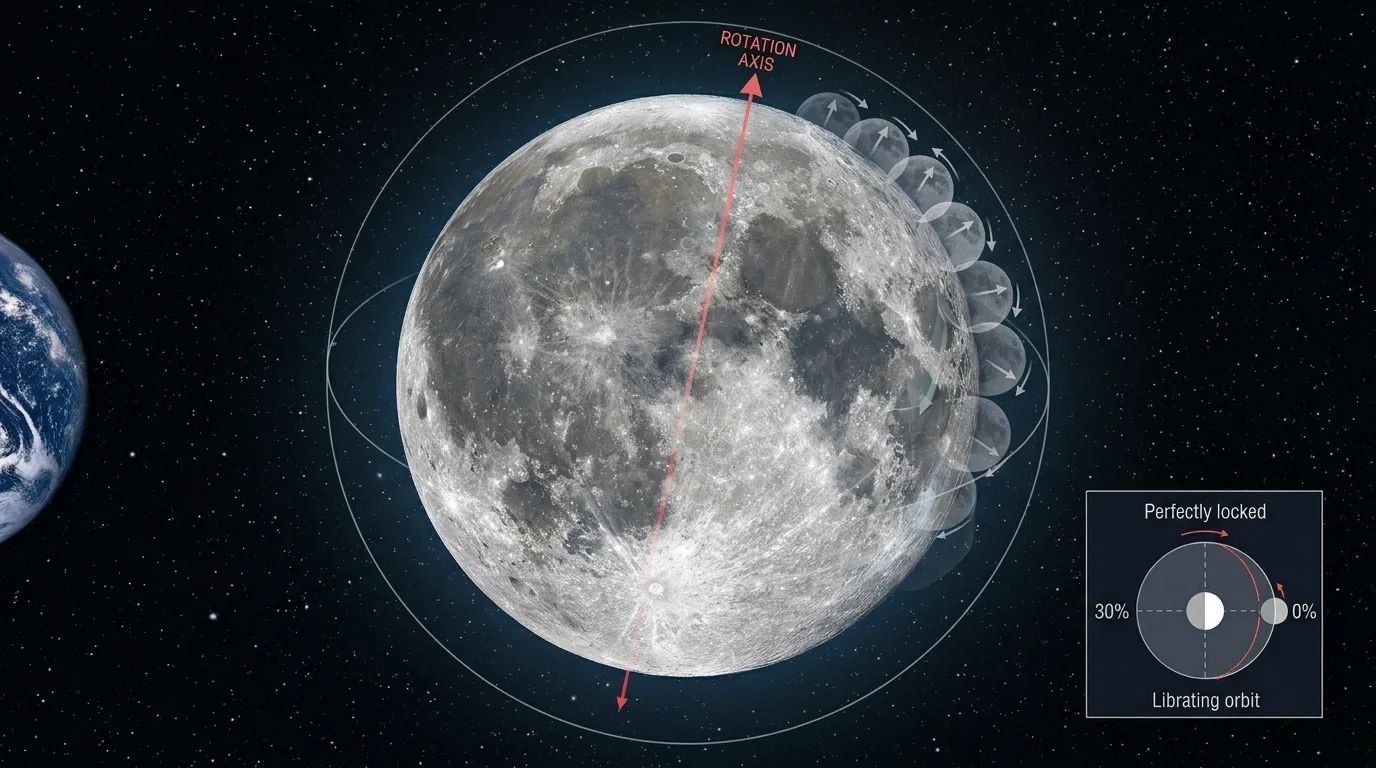
The gravitational dance between these two bodies is not a one-way street. The satellite’s movements have profound and necessary impacts on our world.
Ocean Tides and Gravitational Pull
The most obvious effect of our satellite is the ocean tides. As it orbits, its gravity pulls on the oceans, creating a bulge of water on the side facing it. Another bulge forms on the exact opposite side due to centrifugal force. As our planet spins through these bulges, we experience high and low tides. Tracking the phases of the moon can help you predict tidal strength, with full and new phases bringing the most extreme tides, known as spring tides.
The Gradual Slowing of Earth’s Rotation
Just as our planet locked its satellite into synchronous rotation, the satellite is returning the favor. The friction of the ocean tides moving across the seabeds acts as a brake on our world’s spin. Billions of years ago, a day lasted only about five hours. Today, it is 24 hours. Billions of years from now, our planet could become tidally locked to its satellite, meaning only one hemisphere would ever see it in the sky.
Common Mistakes to Avoid When Studying Lunar Motion
When learning about celestial mechanics, it is easy to fall into traps. Here are some common mistakes to avoid:
- Confusing Rotation with Revolution: Remember that rotation is spinning on an axis, while revolution is orbiting another body.
- Believing in the “Dark Side”: Avoid using this term to describe the far side. The far side gets plenty of sunlight during the phases of the moon.
- Thinking the Distance is Constant: The orbit is elliptical, not a perfect circle. This means the distance varies, creating phenomena like supermoons.
- Assuming the Orbit is Flat: The orbit is tilted by about 5 degrees relative to our orbit around the sun. If it were perfectly flat, we would have a solar eclipse every single month.
Pro Tips and Expert Insights on Lunar Observation
To get the most out of your stargazing, keep these expert tips in mind:
- Observe the Terminator Line: The best time to look through a telescope is not during a full phase, but during quarter phases. Look at the terminator line (the dividing line between light and shadow) where the long shadows make craters and mountains pop in high relief.
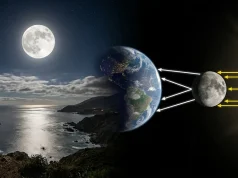
- Look for Earthshine: During a crescent phase, you can often see the unlit portion glowing faintly. This is “earthshine,” caused by sunlight reflecting off our planet’s oceans and clouds, hitting the lunar surface, and bouncing back to our eyes.
- Track the Libration: Because the orbit is elliptical, the satellite travels faster when it is closer to us and slower when it is farther away. This causes a slight wobble called libration, allowing us to peek just around the edges and see about 59% of the surface over time, rather than just 50%. You can explore the mechanics of libration through resources like Space.com.
Comparing Earth’s Rotation to Lunar Rotation
To clarify the differences in mechanics, let’s look at a structured comparison between our home planet and its satellite.
|
Feature |
Earth |
The Moon |
|---|---|---|
|
Rotation Period |
24 hours |
27.3 days |
|
Orbital Period (Revolution) |
365.25 days (around the sun) |
27.3 days (around Earth) |
|
Synodic Day (Sunrise to Sunrise) |
24 hours |
29.5 days |
|
Axial Tilt |
23.5 degrees |
1.54 degrees |
|
Tidal Locking |
No (but gradually slowing) |
Yes (locked to Earth) |
The Future of the Earth-Moon System
Our solar system mechanics are never completely static. The dynamic relationship between our world and its companion will continue to evolve over astronomical time scales.
Will the Moon Eventually Stop Orbiting?
As mentioned earlier, the conservation of angular momentum means the satellite is drifting away. As it moves farther away, its orbital period will increase. In the very distant future—assuming the sun does not expand and consume both bodies first—the two could become mutually tidally locked. In this scenario, they would face each other perfectly stationary in the sky, taking roughly 47 days to complete a single orbit and rotation.
The question of does the moon rotate is fundamental to understanding our place in the universe. We have uncovered that it does indeed spin on its axis, locked in a delicate gravitational dance that keeps one face hidden from our view while driving the tides that shape our world.
Keep looking up and exploring the night sky. By understanding the celestial mechanics above you, every glance at the stars becomes a richer, more profound experience. Grab a telescope, track the phases, and witness the incredible physics of our solar system in real time.
FAQs
Does the moon rotate on its axis?
Yes, it rotates on its own internal axis. It takes approximately 27.3 days to complete one full rotation, which perfectly matches the time it takes to orbit our planet.
Why do we only see one side if it rotates?
We only see one side because of a phenomenon called tidal locking. The rotation period and orbital period are exactly the same, meaning it turns just enough to keep the same face pointed toward us at all times.
What is the dark side?
The “dark side” is a misnomer for the far side. Every part of the surface receives sunlight. It is only dark to us because we cannot see it from the ground.
How long is a single day on the surface?
A single day, measured from one sunrise to the next (a synodic day), takes about 29.5 Earth days. This means you would experience about two weeks of daylight followed by two weeks of night.
Does the moon rotate around the sun?
Yes, as it orbits our planet, it is also carried along with us on our yearly journey around the sun.
What causes tidal locking?
Tidal locking is caused by the gravitational pull of a larger body on a smaller orbiting body. The larger body’s gravity creates friction that slows the smaller body’s rotation until it matches its orbital speed.
Is the satellite moving away from us?
Yes, it is gradually moving away at a rate of about 1.48 inches (3.8 centimeters) per year due to the transfer of angular momentum from our oceans’ tidal friction.
Can we ever see the far side from the ground?
Because of a slight wobble in the orbit called libration, we can actually see about 59% of the total surface over time, allowing us to peek slightly over the edges.
Why doesn’t the far side have large dark spots?
The crust on the far side is much thicker than on the near side. This prevented ancient magma from breaking through to the surface to form the dark basaltic plains, or maria, that we see on the near side.
If the moon didn’t rotate, what would happen?
If it did not rotate on its axis at all, we would gradually see all sides of its surface over the course of a month as it traveled in its orbit around us.