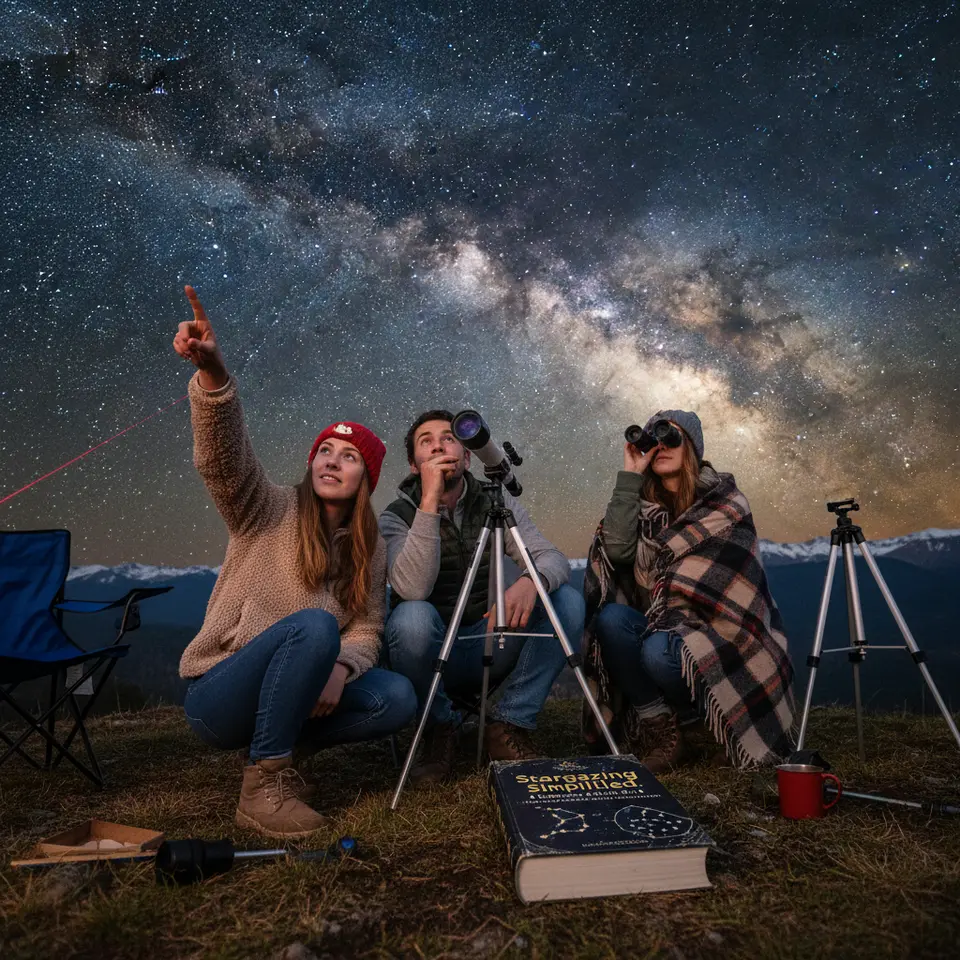
Few experiences rival the sense of awe that washes over us when we step outside on a crisp, clear night and gaze into the vast expanse above. Stargazing is more than a serene hobby—it’s an invitation to explore the universe and deepen our connection with the cosmos. Today, with minimal equipment and a bit of guidance, anyone can begin to unravel the mysteries shimmering overhead. This year (2026), as light pollution and urban sprawl continue to obscure our view of the heavens, it has never been more critical to learn how to seek out darker skies, interpret celestial patterns, and record your personal cosmic discoveries.
In today’s digital landscape, a wealth of tools and resources is readily available—from mobile apps that map constellations in real time to online communities where enthusiasts share observing tips. Whether you’re armed only with binoculars or equipped with a sophisticated telescope, this guide will lead you through the fundamental concepts, essential gear, prime viewing locations, and techniques for identifying stars, planets, and deep-sky objects. You’ll also learn how to capture astrophotographs and keep a detailed log of your observations. From planning your first outing and understanding sky charts to exploring meteor showers and eclipses, you’ll have everything you need to foster a lifelong passion. By the end of this article, you’ll feel confident locating key celestial landmarks, adjusting your equipment settings for optimal views, and sharing your observations with astronomy clubs or online forums. Embark on this stellar adventure and let the universe unfold above you as you engage in the timeless pursuit of stargazing.
Exploring the Fundamentals of Stargazing

Before setting up your first viewing session, it’s essential to grasp the key concepts that underpin stargazing. At the heart of this practice lies the celestial sphere, an imaginary dome that stretches from horizon to zenith, projecting all stars and planets as if pinned to its surface. By dividing this sphere into grids using celestial coordinates—declination (comparable to latitude) and right ascension (comparable to longitude)—you can accurately locate any point of interest in the night sky.
Brightness is quantified through the magnitude scale, where stars with lower magnitude values appear brighter than their higher-magnitude counterparts. This system enables observers to predict which objects will be visible under varying sky conditions, whether you’re in a suburban backyard or at a dedicated dark-sky site. A clear understanding of magnitude helps you prioritize targets and set realistic expectations for each stargazing outing.
In addition to stars, stargazers often study asterisms (informal star patterns) and deep-sky objects, such as nebulae, galaxies, and star clusters. While asterisms like the Summer Triangle serve as useful waypoints, deep-sky wonders—cataloged in references like the Messier list—offer glimpses into the vast structures that populate our universe. To learn more about these celestial treasures, you can explore resources provided by NASA or consult academic publications from major research institutions.
Another crucial aspect is the phase of the Moon. Its waxing and waning significantly influence sky brightness; a full Moon can outshine nearby faint objects, while a new Moon phase provides the darkest conditions for observing distant galaxies and nebulae. Tracking lunar phases ensures that you maximize contrast and visibility during stargazing sessions.
Furthermore, understanding the ecliptic plane—the apparent path the Sun traces across the sky—helps you anticipate where planets and the zodiac constellations will appear. Over the course of weeks, you can watch Mars, Venus, and Jupiter migrate along this band, providing dynamic targets for observation. Recognizing this path also aids in planning multi-night campaigns to capture the movement of solar system objects.
Stargazing today is greatly enhanced by the integration of digital sky charts and mobile applications. Tools like Stellarium (desktop and mobile) and SkySafari give real-time overlays of objects above your horizon, streamlining the identification process. However, even with these innovations, a solid grasp of the underlying principles ensures you can cross-check app data and troubleshoot any discrepancies during observation.
Building this foundation in the initial stages equips you to progress swiftly as your stargazing skills evolve. Whether your goal is to count meteor showers, chart the progression of lunar craters, or discover faint galaxies beyond the Milky Way, these core concepts will serve as the compass guiding your celestial pursuits. With the fundamentals mastered, you’ll be prepared to select the optimal equipment for each excursion.
Choosing the Right Tools for Your Night Sky Adventures
One of the great advantages of stargazing is that you can start with minimal gear. For many enthusiasts, the naked eye alone reveals constellations, bright planets, and meteor showers. Yet, equipping yourself with binoculars or a telescope unlocks deeper cosmic vistas and enhances your overall experience.
Binoculars are often the first optical aid for beginners. Models with specifications 7×50 or 10×50 strike a balance between magnification and light gathering, making them ideal for scanning star fields and spotting open clusters. Their wide field of view and portability mean you can effortlessly hop between targets and share glimpses with friends or family.
When you’re ready to upgrade, telescopes offer greater power and resolution. There are three primary designs to consider:
- Refractors: Utilizing glass lenses, refractor telescopes deliver crisp images of the Moon, planets, and bright double stars. They require little maintenance, making them a popular choice for first-time telescope owners.
- Reflectors: Using mirrors instead of lenses, reflectors excel at revealing faint deep-sky objects like nebulae and galaxies. Periodic alignment—known as collimation—is necessary to ensure peak performance.
- Catadioptrics: These hybrid telescopes combine lenses and mirrors to produce versatile, compact instruments. Though often pricier, they offer a convenient compromise between aperture size and portability.
Alongside your main optical instrument, several accessories can dramatically improve your results:
- Mount or Tripod: A sturdy, vibration-resistant support keeps your view steady, especially during extended observations.
- Star Charts and Planispheres: Printed guides that help you identify objects when digital devices run out of power.
- Red-Light Flashlight: Preserves night vision while allowing you to consult maps and adjust equipment.
- Smartphone Apps: Free or inexpensive apps such as Stellarium and SkySafari overlay constellations and objects on camera images, transforming your phone into a handheld planetarium.
A crucial specification to consider is aperture, the diameter of your telescope’s primary lens or mirror. A larger aperture gathers more light, making faint objects more accessible and producing sharper details. However, increased aperture often means greater weight and size—factors to consider if portability is essential. Focal length, another optical metric, influences magnification when combined with your eyepieces. Longer focal lengths yield higher magnification for lunar and planetary observation, while shorter focal lengths offer wider fields of view suited for star clusters and nebulae.
Equatorial mounts are particularly valuable for astrophotography and extended observations, as they track celestial objects across the sky with a single axis of movement, counteracting Earth’s rotation. Altazimuth mounts, which move in altitude and azimuth, are more intuitive for visual observing and often easier to set up in the field. Your choice of mount should align with your primary observing goals and willingness to master more advanced tracking techniques.
Finding the Perfect Stargazing Spot
One of the biggest hurdles for stargazing enthusiasts today is finding skies dark enough to reveal faint stars and deep-sky objects. Light pollution from urban centers washes out subtle details, drastically reducing the number of visible stars. To minimize this effect, locate areas designated as dark-sky preserves or parks. Organizations such as the International Dark-Sky Association certify locations that meet stringent criteria for minimal artificial illumination.
Digital tools like DarkSiteFinder and Light Pollution Map can help you scout rural areas or remote state and national parks where light domes are virtually nonexistent. Additionally, many national parks offer night sky programs that introduce visitors to astronomy through ranger-led talks and telescope viewing sessions. You can find a list of these events on the National Park Service night sky page.
Timing is equally important when planning your outing. A new Moon phase or a waxing crescent provides the darkest windows for deep-sky stargazing, while a full Moon can illuminate terrestrial landscapes for night hiking but will wash out dim nebulae and galaxies. Check weather forecasts for clear skies, low humidity, and minimal atmospheric turbulence—factors that directly affect seeing conditions.
If you’re restricted to suburban or urban environments, focus on brighter targets such as the Moon, major planets, and star clusters like the Pleiades. Light pollution filters, available for some telescopes, can enhance contrast by selectively reducing specific wavelengths associated with streetlights. Even in brightly lit areas, these filters will improve your view of emission nebulae and the Milky Way’s brighter lanes.
Elevation can also play a significant role in your stargazing experience. Higher altitudes often offer thinner atmospheres, reducing atmospheric scattering and providing sharper, more stable views of celestial objects. Mountain overlooks and high-altitude plateaus are popular among serious amateurs for this reason. However, always research access restrictions and prepare for temperature drops at elevation.
Moreover, a clear and unobstructed horizon is vital if you plan to observe objects near the celestial horizon, including planetary conjunctions or meteor showers that radiate from low elevation points. Scout your location during daylight hours to identify potential obstacles such as trees, buildings, or terrain features that could block key sightlines.
Finally, ensure that your chosen spot is safe and accessible. Let someone know your itinerary, carry enough water and snacks, and consider the availability of facilities. In today’s digital landscape, you can join online forums or social media groups to discover local stargazing meetups, gain insights on hidden gems, and receive real-time recommendations from experienced observers in your region.
Navigating Constellations, Planets, and Deep-Sky Wonders
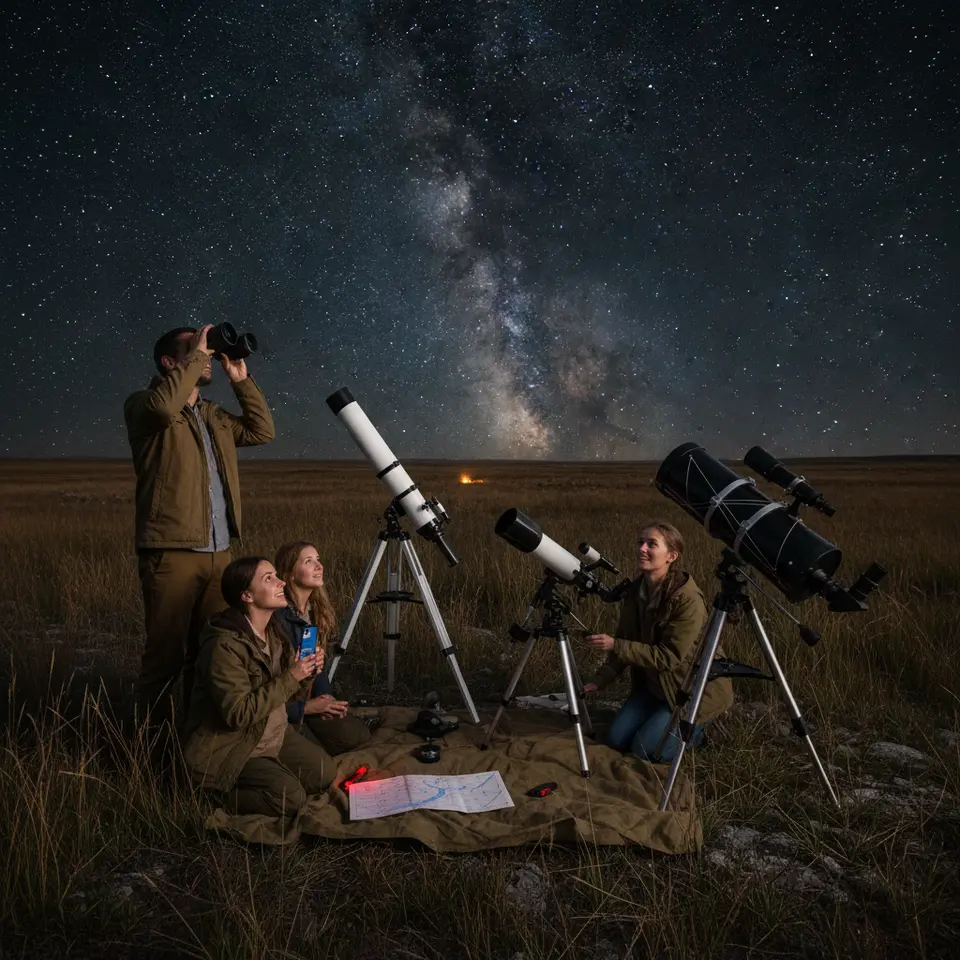
Once you’ve set up your equipment under dark skies, the next step is to learn how to move across the heavens with confidence. Start by locating easily recognizable patterns—asterisms like the Big Dipper, which points toward Polaris, the North Star. From Polaris, you can orient yourself and trace out adjacent constellations such as Cassiopeia, identifiable by its distinctive “W” shape. Mapping these signposts builds a mental framework for exploring fainter regions of the sky.
For a systematic approach, acquire a current star atlas or consult digital catalogs endorsed by the International Astronomical Union. These resources divide the sky into sections, enabling you to plan observing sessions targeted at specific constellations, planets, or Messier objects. Track the movement of planets against the backdrop of fixed stars—since planets wander along the ecliptic plane, they often pass through zodiac constellations. Monitoring this progression night after night offers a dynamic observing experience.
Planets are generally brighter than most stars and do not twinkle. Venus and Jupiter often dominate the twilight hours, while Saturn’s rings and Jupiter’s Galilean moons become visible through binoculars or small telescopes. Mars exhibits subtle surface markings and polar caps when close to opposition. By referring to an astronomy calendar, you can determine when each planet reaches its optimal viewing window.
Deep-sky objects, cataloged by Charles Messier in the 18th century, include notable targets such as the Andromeda Galaxy (M31), the Orion Nebula (M42), and the Hercules Globular Cluster (M13). These Messier objects are staples for beginners, as they remain visible even under suburban skyglow. To observe them effectively, start with lower magnification to locate each target, then gradually increase power to reveal finer details.
Advanced observers can venture beyond the Messier list, exploring the NGC (New General Catalogue) or IC (Index Catalogue) for thousands of galaxies, nebulae, and clusters. Many of these deep-sky treasures reward patience and dark conditions, so schedule extended sessions around a new Moon and allow your eyes at least 20 minutes to adapt to darkness.
Utilizing observing techniques such as averted vision can significantly enhance the visibility of faint objects. By looking just to the side of a target, you engage the rod cells in your retina, which are more sensitive to dim light. This simple trick can reveal wisps of nebular gas or the soft glow of distant galaxies.
Additionally, specialized filters—such as OIII and UHC filters—can isolate the emission lines of planetary and diffuse nebulae, boosting contrast against the background sky. These filters are particularly effective for objects like the Dumbbell Nebula (M27) and the Veil Nebula in Cygnus. Experimenting with different filter types and observing techniques will broaden the range of objects you can detect and photograph throughout the year.
Documenting and Sharing Your Celestial Observations
Maintaining a detailed observing log is a cornerstone of any stargazing journey. A well-structured logbook records the date, time, observing location, sky conditions, equipment used, and specific objects observed. This record not only tracks your progress but also serves as a reference when you revisit challenging targets. Whether you prefer a traditional notebook or digital software, consistency in note-taking will accelerate your learning and add depth to each session.
For astrophotographers, documenting exposure settings, lens and telescope specifications, ISO, and exposure duration is critical. Capturing RAW images provides maximum data for post-processing in software such as DeepSkyStacker or PixInsight. Image stacking techniques combine multiple shorter exposures to reduce noise and amplify faint details in galaxies and nebulae. A star tracker mount can enable exposures longer than 30 seconds without star trails, opening the door to exquisite wide-field astrophotography.
Sharing observations and images with the astronomy community enriches the experience. Consider joining local astronomy clubs, which often host star parties and group observing sessions. Online platforms like cloud-based image repositories or social media groups dedicated to amateur astronomy allow you to exchange tips, seek feedback, and showcase your celestial images. Contribute to citizen science projects—organizations such as Zooniverse run programs where volunteers help classify galaxies or identify supernova candidates using real telescope data.
When writing up your findings, adhere to clear and concise descriptions. For each object, note its catalog designation, observed magnitude, and any distinguishing features. Supplement your text with sketches or annotated photographs. These visual aids not only clarify your observations but also enhance the narrative when sharing with peers or publishing on a personal blog.
Leveraging modern technology, you can integrate your logbook with mobile apps that sync data across devices. Tools like SkySafari and Star Walk allow you to attach location data, timestamps, and screenshots directly into your journal. Regularly review past entries to identify patterns—such as the recurrence of particular celestial alignments or seasonal meteor shower peaks—informing your planning for future sessions.
By systematically documenting and sharing your stargazing exploits, you become part of a global network of observers driven by curiosity and discovery. Every sketch, photograph, and log entry contributes to a collective understanding of the night sky, ensuring that your personal journey echoes across the wider astronomical community.
FAQ
- Do I need a telescope to start stargazing? No, many celestial objects like constellations, meteor showers, and bright planets are visible with the naked eye. Binoculars (e.g., 7×50 or 10×50) offer a great next step before investing in a telescope.
- When is the best time for stargazing? The darkest skies occur around a new Moon phase, when lunar light is minimal. Check weather forecasts for clear, dry nights with low atmospheric turbulence to maximize visibility.
- How can I find dark-sky locations near me? Use online tools like DarkSiteFinder or the Light Pollution Map to identify nearby dark-sky preserves or remote parks. Organizations such as the International Dark-Sky Association also list certified sites.
- What is averted vision and why is it useful? Averted vision involves looking slightly to the side of a faint object, engaging the rod cells in your retina that are more sensitive to low light. This technique can reveal subtle nebulae and galaxies.
- How do I improve my astrophotography results? Record exposure settings, use RAW format, and apply stacking techniques in post-processing software like DeepSkyStacker. A star tracker or equatorial mount will allow longer exposures without star trails.
Conclusion
Stargazing transforms ordinary nights into portals of cosmic exploration, blending the tranquility of nature with the thrill of discovery. Embracing stargazing in 2026 offers an enriching blend of science, art, and adventure. By mastering basic astronomical concepts, selecting appropriate gear, and choosing optimal viewing locations, you’ll lay the groundwork for countless nights of celestial observation. Techniques like star-hopping, averted vision, and image stacking will deepen your engagement and expand the diversity of objects you can observe and capture. Keeping a detailed logbook and sharing your insights within astronomy communities further enhances your learning and fuels inspiration.
Whether you’re a casual observer gazing through binoculars or an aspiring astrophotographer equipped with a high-end telescope, each night under the stars brings new opportunities to witness the universe’s grandeur. Stay attuned to meteor showers, planetary alignments, and special celestial events, using digital tools and authoritative resources to plan ahead. Above all, allow curiosity to guide you; with every glance at the sky, you contribute to the timeless tradition of exploration that has captivated humanity for millennia.
As you embark on this stargazing journey, remember that the most profound discoveries often arise from patient observation and thoughtful documentation. Keep exploring, learning, and connecting with the global community of sky enthusiasts. The next time you step outside into the nocturnal hush, view the cosmos not just as distant lights but as portals to stories unfolding across space and time. Happy stargazing!