Is the moon a planet or satellite? For centuries, skywatchers have gazed at our closest celestial neighbor and pondered its true identity in the cosmic hierarchy.
This comprehensive guide explores every angle of the debate, from official astronomical definitions to emerging scientific perspectives, delivering clear answers backed by data from NASA and the International Astronomical Union. By the end, you’ll understand not only the classification but also the profound implications for how we view our solar system and plan future missions.
What Makes Something a Planet? Official Definitions and Criteria
The question of classification hinges on precise criteria established by the International Astronomical Union (IAU) in 2006. A planet must orbit the Sun directly, achieve hydrostatic equilibrium (a nearly round shape due to its own gravity), and clear its orbital neighborhood of other debris. Critically, it cannot be a satellite orbiting another body.
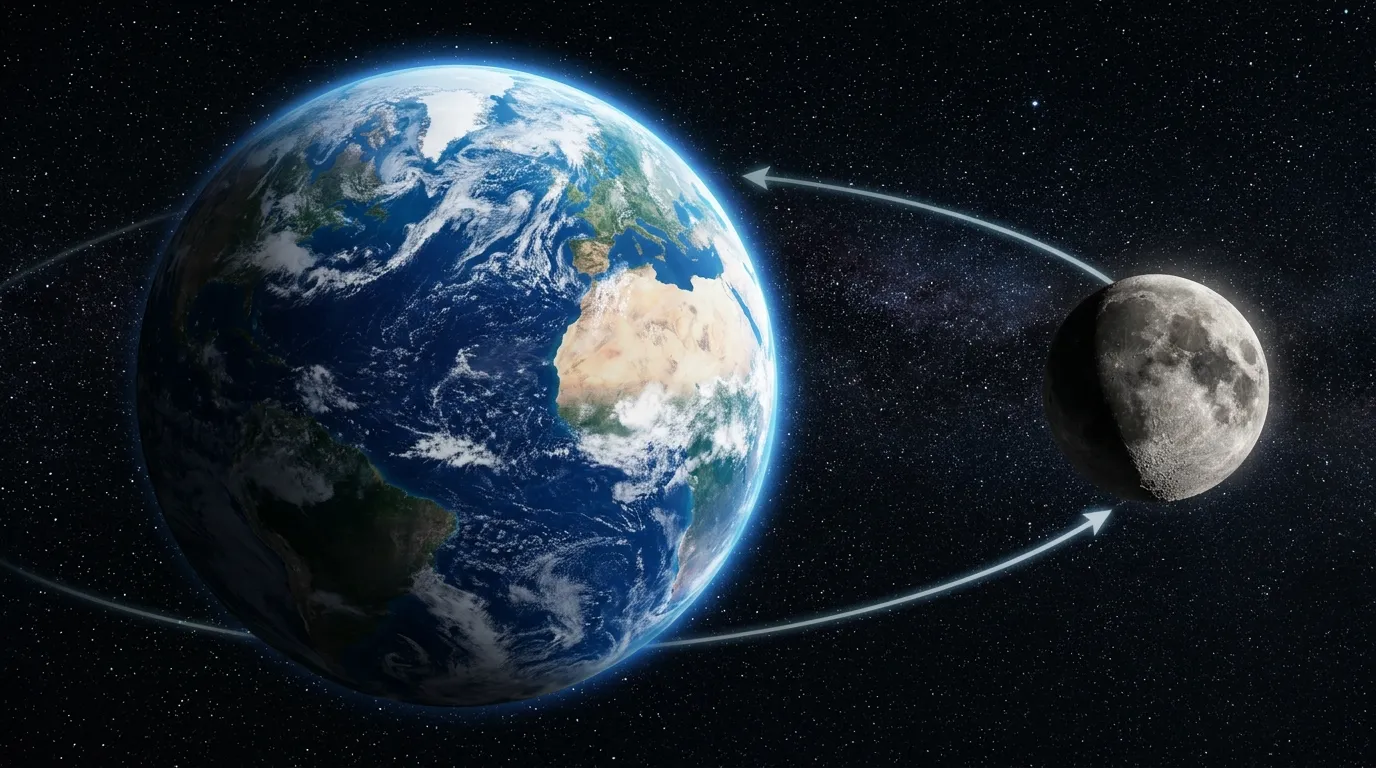
Our Moon fails the first and last tests outright. It orbits Earth, not the Sun independently, making it a natural satellite by definition. NASA explicitly describes the Moon as “Earth’s only natural satellite,” orbiting at an average distance of 238,855 miles (384,400 kilometers). This classification aligns with centuries of observation since Galileo first turned his telescope skyward.
Yet definitions evolve. Ancient Greeks viewed the Moon as one of seven “planets” (wandering stars) alongside the Sun and visible planets in a geocentric model. Copernicus and Kepler shifted this to a heliocentric framework, reclassifying the Moon as a satellite. The 2006 IAU vote, which also demoted Pluto, reinforced this view while sparking ongoing debate among planetary scientists.
The Moon as Earth’s Natural Satellite: Core Characteristics and Orbit
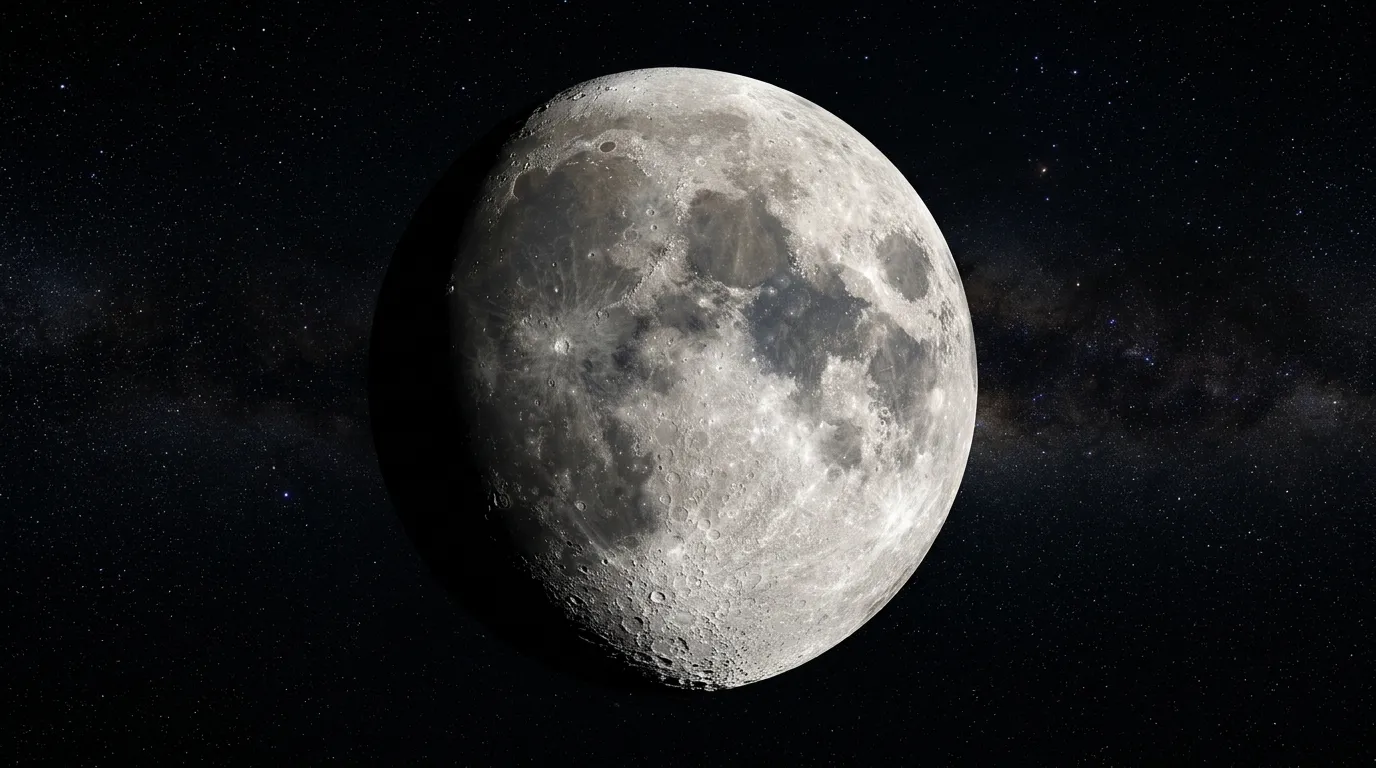
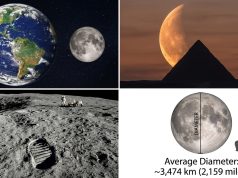
Earth’s Moon is a differentiated, terrestrial body with a diameter of 3,474 km—roughly one-quarter of Earth’s—and a mass just 1.2% of our planet’s. Its surface gravity is about one-sixth of Earth’s, the second-highest among solar system moons after Io.
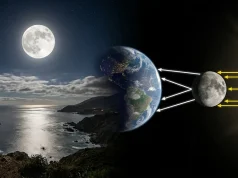
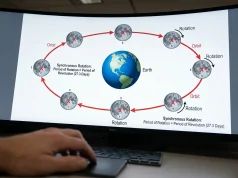
Orbitally, the Moon completes a sidereal revolution every 27.3 days and a synodic cycle (phases as seen from Earth) every 29.5 days. It is tidally locked, always showing the same face to Earth due to gravitational synchronization. The Earth-Moon barycenter lies inside Earth, about 3/4 of the way from the center to the surface, confirming the Moon’s subordinate role. Over billions of years, tidal friction has caused the Moon to recede at 3.8 cm per year; in the distant future, this could shift the barycenter outward, prompting some to revisit double-planet arguments.
Unlike artificial satellites, the Moon formed naturally and influences Earth profoundly through tides, stabilizing axial tilt and moderating climate. Without it, Earth’s rotation would be chaotic, with potentially extreme seasonal variations.
Geophysical Perspectives: Why Some Call It a Satellite Planet
While the IAU orbital definition dominates, geophysical criteria focus on intrinsic properties rather than location. Under this lens, any object massive enough for self-gravity to enforce a spherical shape qualifies as planetary. The Moon meets this threshold handily—it is larger than any dwarf planet and exhibits a fully differentiated interior with crust, mantle, and core.
Wikipedia and some planetary scientists describe it explicitly as a “planetary-mass object or satellite planet.” Its density, composition (rich in silicates, with an iron core), and geological history mirror terrestrial planets more than typical small moons. Surface features include ancient lava plains (maria), highlands, and impact craters, all formed through processes akin to those on Mercury or Mars.
This perspective highlights a spectrum: planets, dwarf planets, and large moons blur at the edges. Exomoons discovered around gas giants can rival Earth in size, raising questions about whether orbital context alone should dictate nomenclature.
The Giant Impact Hypothesis: How the Moon Formed
Approximately 4.51 billion years ago, a Mars-sized protoplanet called Theia collided with proto-Earth in a glancing blow. Debris from both bodies coalesced in orbit, forming the Moon within about 100 million years. This explains the Moon’s oxygen isotope similarity to Earth, its depleted volatile elements, and the lack of a large iron core relative to its size.
Evidence includes Apollo mission samples (842 pounds of rocks returned) showing anorthosite crust from a primordial magma ocean and lunar meteorites confirming the timeline. Alternative theories like capture or fission have been largely discarded due to mismatched compositions and angular momentum.
This violent origin underscores the Moon’s planet-like pedigree: it accreted like a planet but ended up bound to Earth.
Earth-Moon System Dynamics: Tidal Forces, Stability, and Exploration
The pair functions as a binary system in many respects. Gravitational interactions drive ocean tides, slow Earth’s rotation (lengthening days by milliseconds per century), and maintain axial stability essential for life. Lunar eclipses and solar eclipses occur because of near-perfect apparent size matching—a cosmic coincidence tied to the current orbital distance.
Human exploration began with Luna 2 in 1959 and peaked with Apollo 11 in 1969. Over 105 robotic missions have followed, revealing polar water ice in shadowed craters—vital for future Artemis bases. NASA’s ongoing Artemis program aims to return humans by the late 2020s, using the Moon as a stepping stone to Mars.
Comparisons: The Moon Versus Planets, Dwarf Planets, and Other Moons
| Feature | The Moon | Mercury (Smallest Planet) | Pluto (Dwarf Planet) | Ganymede (Largest Moon) |
|---|---|---|---|---|
| Diameter (km) | 3,474 | 4,879 | 2,377 | 5,268 |
| Mass (% of Earth) | 1.2 | 5.5 | 0.2 | 2.0 |
| Orbits | Earth | Sun | Sun | Jupiter |
| Atmosphere | Exosphere (tenuous) | Thin | Thin | Thin |
| Geological Activity | Dormant volcanism | None | Possible cryovolcanism | Possible subsurface ocean |
| Classification Consensus | Natural satellite | Planet | Dwarf planet | Natural satellite |
The Moon outmasses every known dwarf planet and exceeds Pluto in size relative to its primary. Yet it remains a satellite because it does not orbit the Sun independently.
Common Mistakes to Avoid When Classifying Celestial Bodies
A frequent error is assuming size alone determines planethood—Pluto’s demotion proves otherwise. Another is conflating natural and artificial satellites; the Moon is natural, while the ISS is not. Misapplying barycenter logic without data leads to premature double-planet claims; current measurements confirm the barycenter remains inside Earth.
Avoid outdated geocentric thinking. Always cross-reference IAU or NASA sources rather than popular media simplifications.
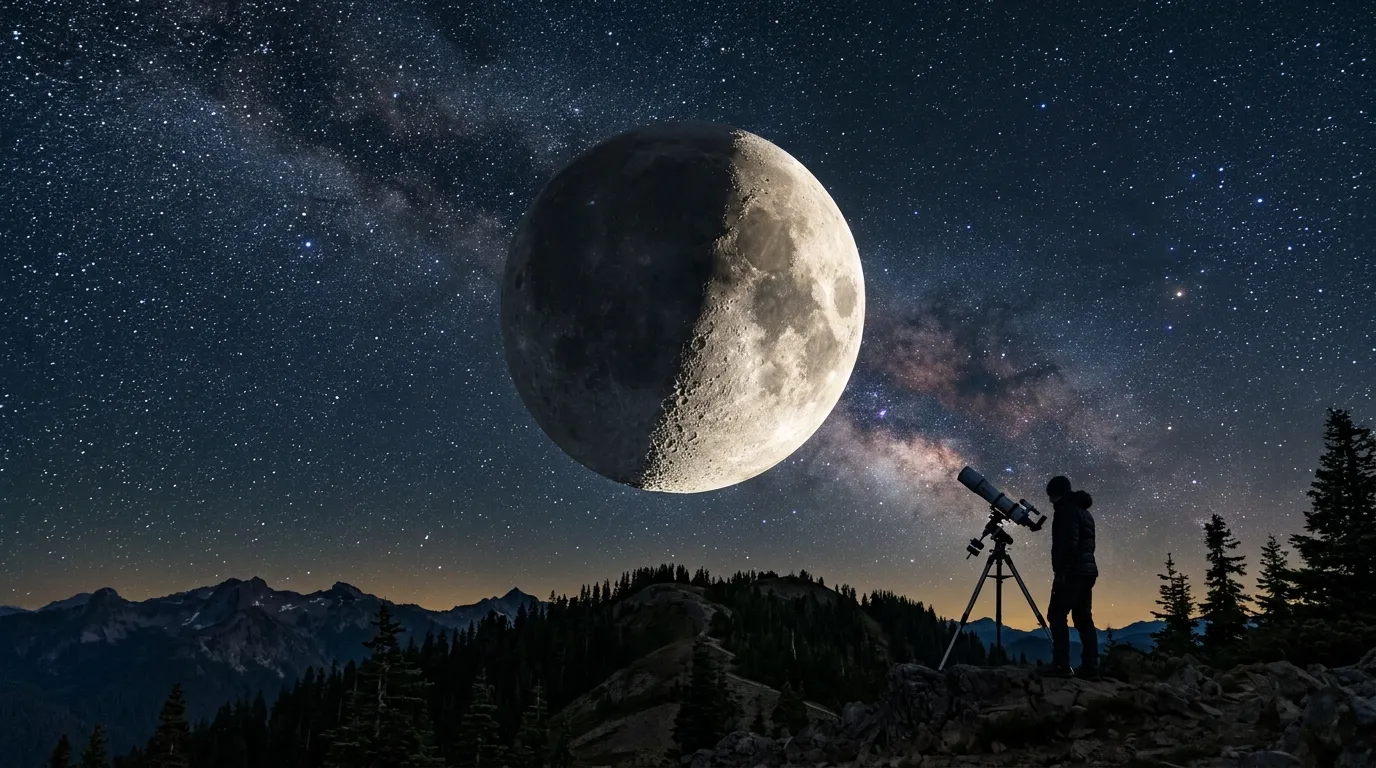
Pro Tip: When observing, use a telescope to spot maria and craters. Apps like Stellarium simulate phases and libration, deepening appreciation for its satellite nature while revealing planet-like geology.
Expert Insight: Planetary scientists like those at NASA emphasize context. The Moon’s geophysical traits make it an ideal laboratory for studying early solar system processes, regardless of label.
Why the Distinction Matters: Scientific, Cultural, and Practical Implications
Labeling shapes research priorities. Treating the Moon as a satellite prioritizes Earth-system studies; viewing it planet-like expands comparative planetology. Culturally, it remains “the Moon” in literature and mythology, symbolizing mystery. Practically, its resources (helium-3, water ice) fuel sustainable lunar economies under the Artemis Accords.
Edge cases abound: what if an exomoon orbits a rogue planet? Or if future missions terraform the Moon? Classifications remain tools, not absolutes, adapting as knowledge grows.
Quick Summary: We’ve examined official definitions, geophysical nuances, formation history, system dynamics, and comparisons. The Moon is unequivocally a natural satellite yet exhibits planetary traits that enrich our understanding.
Conclusion
Ultimately, is the moon a planet or satellite? Scientific consensus holds it as Earth’s natural satellite under IAU and NASA frameworks, yet its planetary-mass characteristics invite deeper discussion. This distinction illuminates broader truths about solar system formation and our place within it.
Ready to explore further? Visit NASA’s Moon Facts for raw data or follow Artemis updates. Share your observations below—your questions fuel discovery.
FAQs
1. Why isn’t the Moon considered a planet despite its size?
It orbits Earth rather than the Sun and has not cleared its orbital path independently, failing IAU criteria. Size alone is insufficient.
2. Could the Earth-Moon system ever become a double planet?
Yes, in the far future as the Moon recedes and the barycenter shifts outside Earth, though this would take billions of years.
3. How does the Moon compare to other large moons like Ganymede?
Ganymede is larger but still a satellite of Jupiter. The Moon is uniquely massive relative to its primary planet.
4. What evidence supports the giant impact formation theory?
Apollo samples show compositional matches to Earth’s mantle, plus matching oxygen isotopes and angular momentum conservation.
5. Does the Moon have its own moons or rings?
No. It possesses neither, unlike some gas giants.
6. How do tides prove the Moon’s satellite influence?
Gravitational pull creates bulges in Earth’s oceans, demonstrating ongoing orbital interaction.
7. Are there any proposals to reclassify the Moon?
Geophysical definitions occasionally label it a satellite planet, but IAU orbital rules prevail.
8. What role does the Moon play in space exploration?
It serves as a testbed for Artemis, a resource base, and a gateway to Mars.
9. How does the Moon’s exosphere differ from a planetary atmosphere?
It is extremely tenuous, offering no protection or weather, unlike even thin planetary atmospheres.
10. Where can I find the most authoritative sources on this topic?
Start with NASA’s planetary definitions and the IAU’s 2006 resolution for primary references.