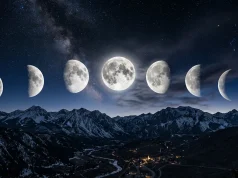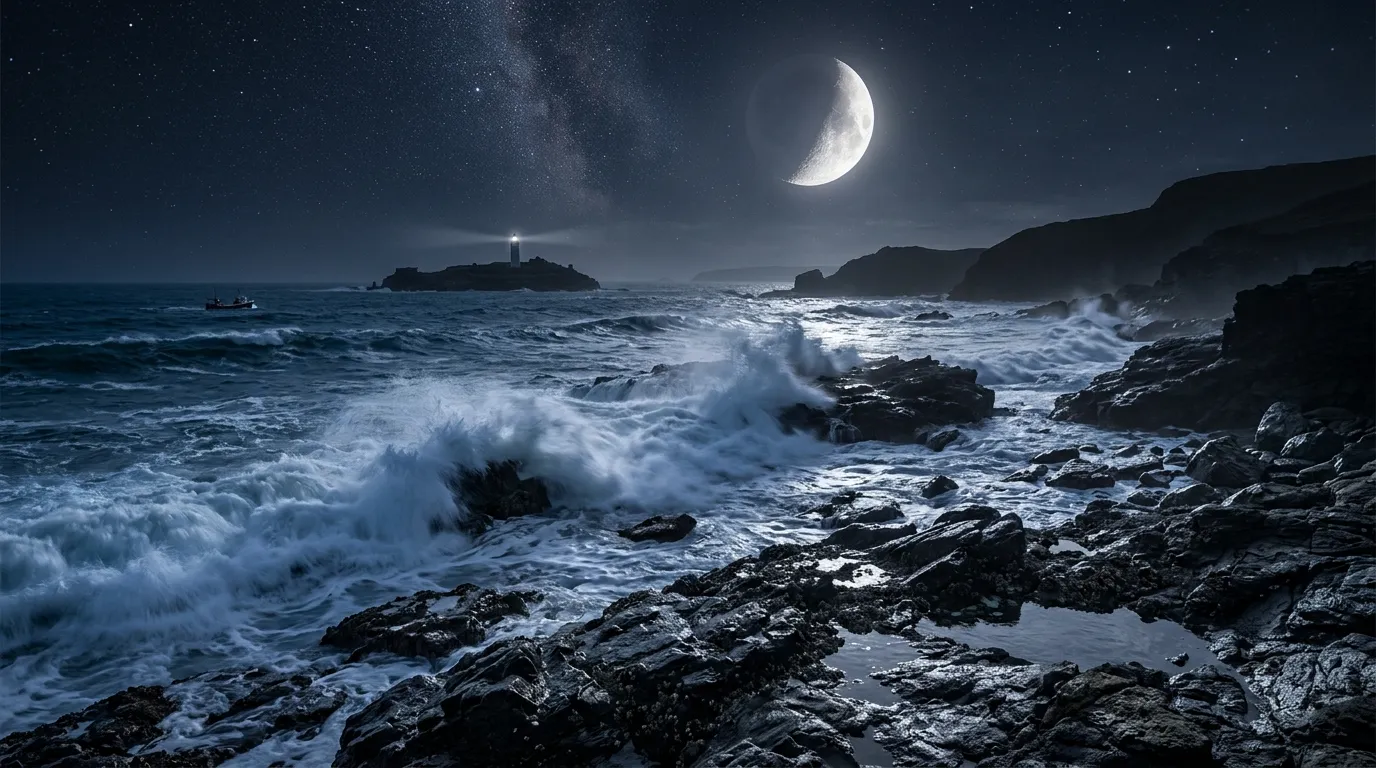
Understanding how-lunar-cycles-affect-earth requires looking beyond the night sky. Our moon exerts a powerful gravitational pull that shapes marine environments, guides animal navigation, and stabilizes our planet.
This guide explores the profound mechanics connecting our planet to its closest celestial neighbor. You will learn the exact processes driving high and low tides, the fascinating ways nocturnal animals use moonlight, and why Earth’s long-term climate relies heavily on continuous lunar orbit patterns.
The Invisible Force of Lunar Gravity
Gravity forms the foundation of the relationship between our planet and the moon. Though the moon sits roughly 238,855 miles away, its mass pulls significantly on our planet. Because water moves much easier than solid rock, this gravitational tug creates visible shifts in our oceans. The liquid surface actually bulges outward toward the moon.
This gravitational relationship does not just pull water. It also pulls the solid ground, though the movement is so slight that we require precise instruments to measure it. As our planet rotates daily on its axis, different landmasses pass through these tidal bulges, creating the rhythmic rise and fall of water levels that coastal communities track every single day.
Why the Moon Overpowers the Sun
You might wonder why the sun, which holds much more mass, does not dictate our tides. The answer comes down to distance. The sun sits 390 times farther away from us than the moon. While solar gravity does influence our oceans, the moon’s closer proximity gives it more than double the tide-generating force of the sun. When you observe the water level dropping at the beach, you are watching the direct result of lunar proximity.
The Mechanics of ocean tides
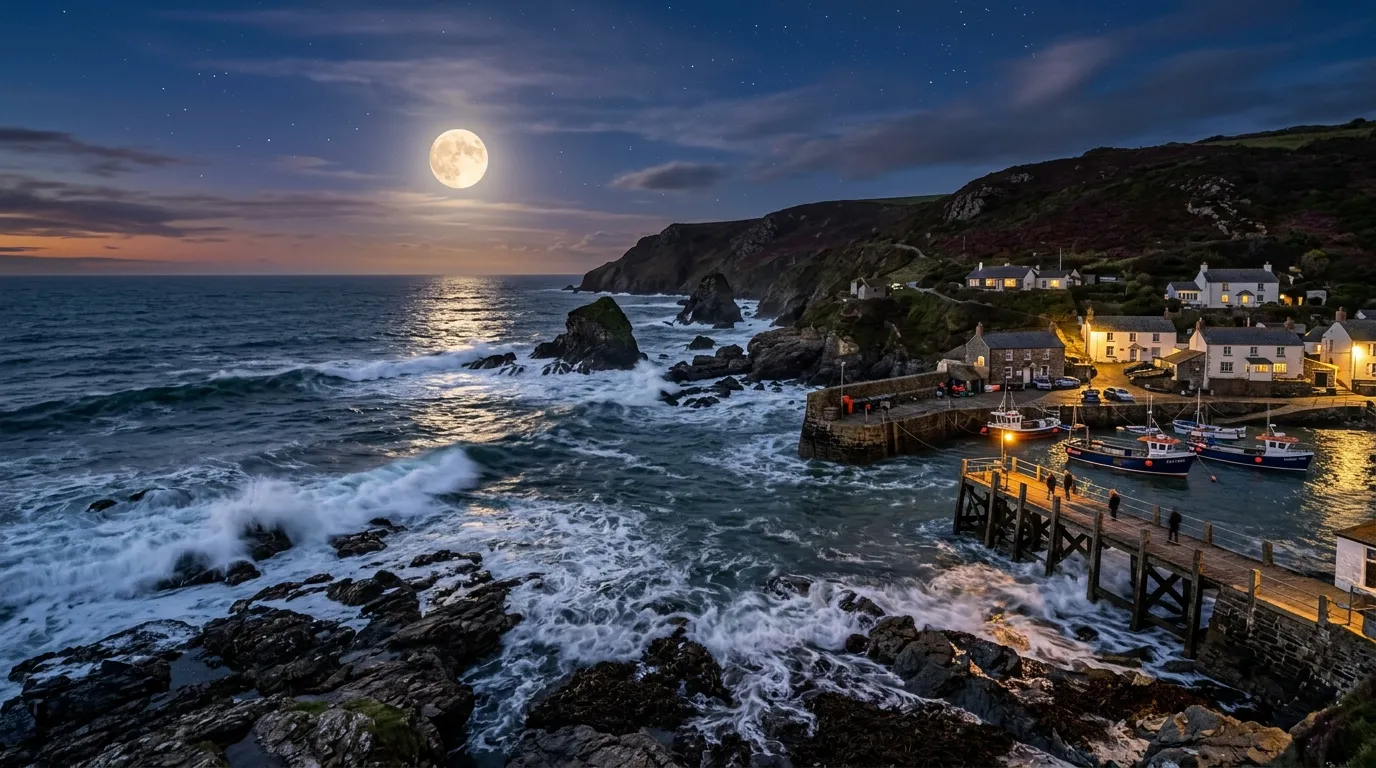
To truly grasp how-lunar-cycles-affect-earth, we must examine the daily and monthly tidal patterns. The gravitational pull creates two primary bulges on our planet: one on the side facing the moon, and another on the exact opposite side.
As we rotate through these bulges, most coastal areas experience two high tides and two low tides every 24 hours and 50 minutes. The extra 50 minutes occur because the moon advances slightly in its orbit while we complete one full rotation.
Spring Tides vs. Neap Tides
The sun and moon occasionally align, combining their gravitational strength or working against each other. This creates distinct tidal variations throughout the month.
|
Tide Type |
Lunar Phase |
Gravitational Alignment |
Visual Effect |
|---|---|---|---|
|
Spring Tide |
Full Moon / New Moon |
Sun and Moon aligned |
Exceptionally high and low tides |
|
Neap Tide |
First Quarter / Last Quarter |
Sun and Moon at 90-degree angles |
Moderate tides with little variation |
The Vital Intertidal Zone
The constant shifting of water creates a unique habitat known as the intertidal zone. This concentrated band of shoreline experiences extreme conditions. Marine organisms here must survive being completely submerged in saltwater, pounded by breaking waves, and then exposed to dry air and baking sunlight just hours later.
Without the moon’s strong gravitational pull, these tides would weaken drastically. A weaker tide would narrow the intertidal zone, increasing competition for resources and threatening the survival of countless species that rely on this specific habitat structure.
Shaping wildlife behavior and Navigation
The moon provides more than just gravitational pull; it provides critical illumination. Many species sync their internal biological clocks—known as circalunar rhythms—directly to lunar phases.
Marine Life Synchronization
Marine biology offers some of the most dramatic examples of lunar influence. Corals on the Great Barrier Reef use moonlight, water temperature, and tide levels to coordinate the largest mass spawning event on the planet. Millions of coral polyps release their reproductive cells simultaneously just after a full moon in late spring.
Similarly, sea turtles rely on high spring tides to carry them far up the beach. This allows them to lay their eggs safely above the standard high-water mark. When the eggs hatch weeks later, the baby turtles use the natural light of the moon reflecting off the ocean to find their way to the water.
Land Animals and Birds
Terrestrial animals also depend on lunar cycles. Some species of dung beetles navigate using the specific polarization patterns of moonlight. If you place them under artificial non-polarized light, they walk in circles. Under natural moonlight, they travel in perfectly straight lines to escape competitors quickly.
Certain bird species, like shearwaters, increase their activity levels during full moons. They use the extra illumination to hunt more effectively and navigate across massive stretches of open ocean during their nocturnal migrations.
Maintaining Earth’s rotation and Tilt
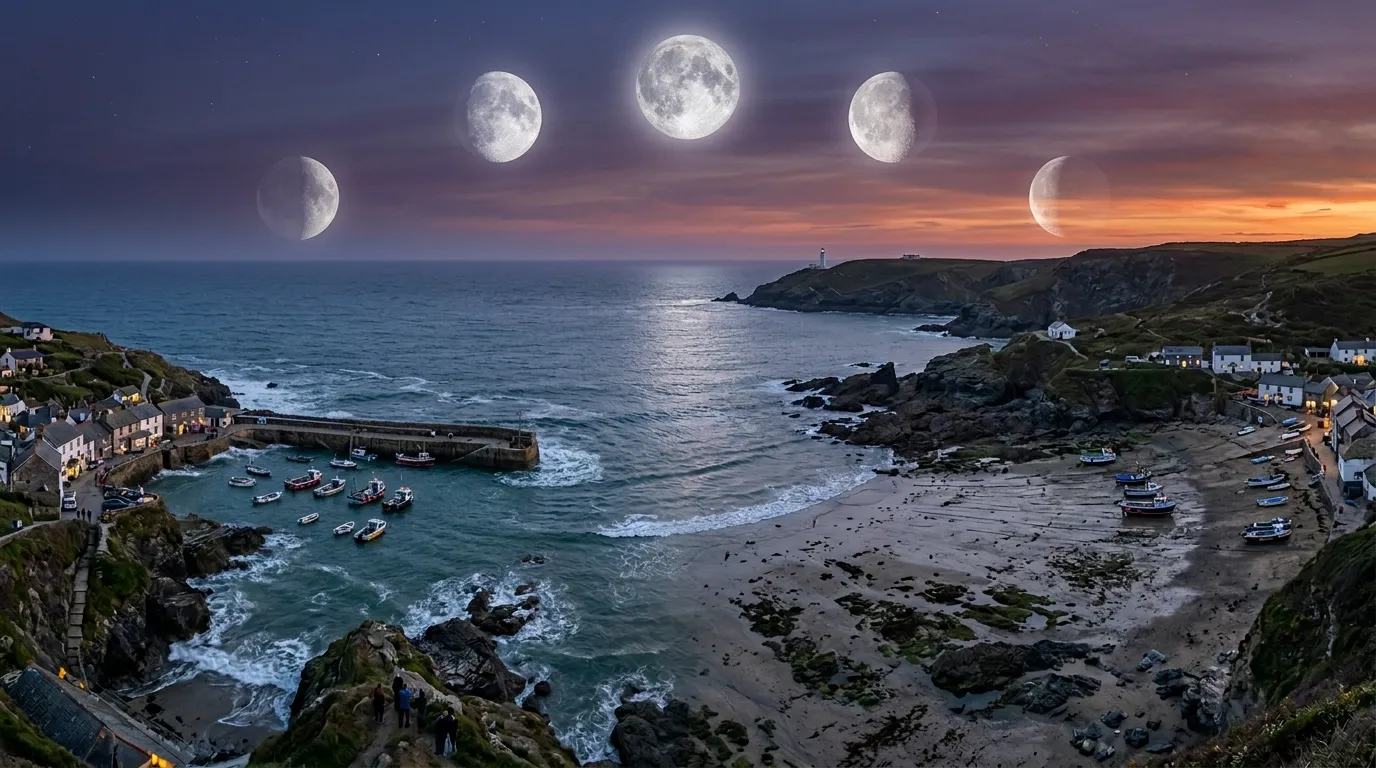
Perhaps the most crucial way how-lunar-cycles-affect-earth involves planetary stability. Our planet currently tilts at an angle of 23.4 degrees relative to its orbit around the sun. This specific tilt creates our regular seasons.
As we spin, we experience a slight wobble, much like a spinning top losing momentum. The moon’s gravity acts as a crucial stabilizing anchor. It keeps this wobble gentle and contained. The entire cycle of this wobble takes about 26,000 years to complete, altering our axis by only a few degrees.
The Threat to climate stability
If we suddenly lost our moon, the consequences for our climate would prove catastrophic. Without that gravitational anchor, our axial tilt could vary wildly over time. Sometimes, we might point straight up and down, completely eliminating the changing seasons. At other times, we might tilt entirely on our side.
A sideways tilt would plunge the poles into scorching heat during their summer months and leave the equator in a deep freeze. This extreme shifting would cause chaotic, unpredictable weather patterns and force drastic ice ages every few thousand years. We rely on the moon to keep our environment predictable enough for complex ecosystems to thrive.
Expert Insights on Lunar Tracking
Biologists and astronomers frequently collaborate to understand lunar impacts. Dr. Tom White from the Natural History Museum notes that circalunar rhythms remain deeply embedded in the life cycles of many organisms. He emphasizes that the challenge lies in separating genuine lunar influence from long-standing myths.
Pro Tip: If you want to observe lunar effects on wildlife, start by visiting tide pools during a spring tide. The extreme low water levels reveal marine life normally hidden deep underwater, providing a perfect opportunity to see how coastal species adapt to shifting water levels.
Common Mistakes to Avoid When Studying Lunar Cycles
When learning about lunar impacts, people often fall into several common traps:
- Assuming the moon emits its own light. The moon only reflects sunlight.
- Believing the moon alters human moods. Extensive scientific studies show no correlation between full moons and erratic human behavior or hospital admissions.
- Thinking tides occur at the exact same time every day. Because the lunar day is 24 hours and 50 minutes long, tide schedules shift forward by nearly an hour each day.
- Confusing spring tides with the season of Spring. Spring tides happen twice every month year-round; the term comes from the concept of water “springing” forth.
The Future of lunar phases and Conservation
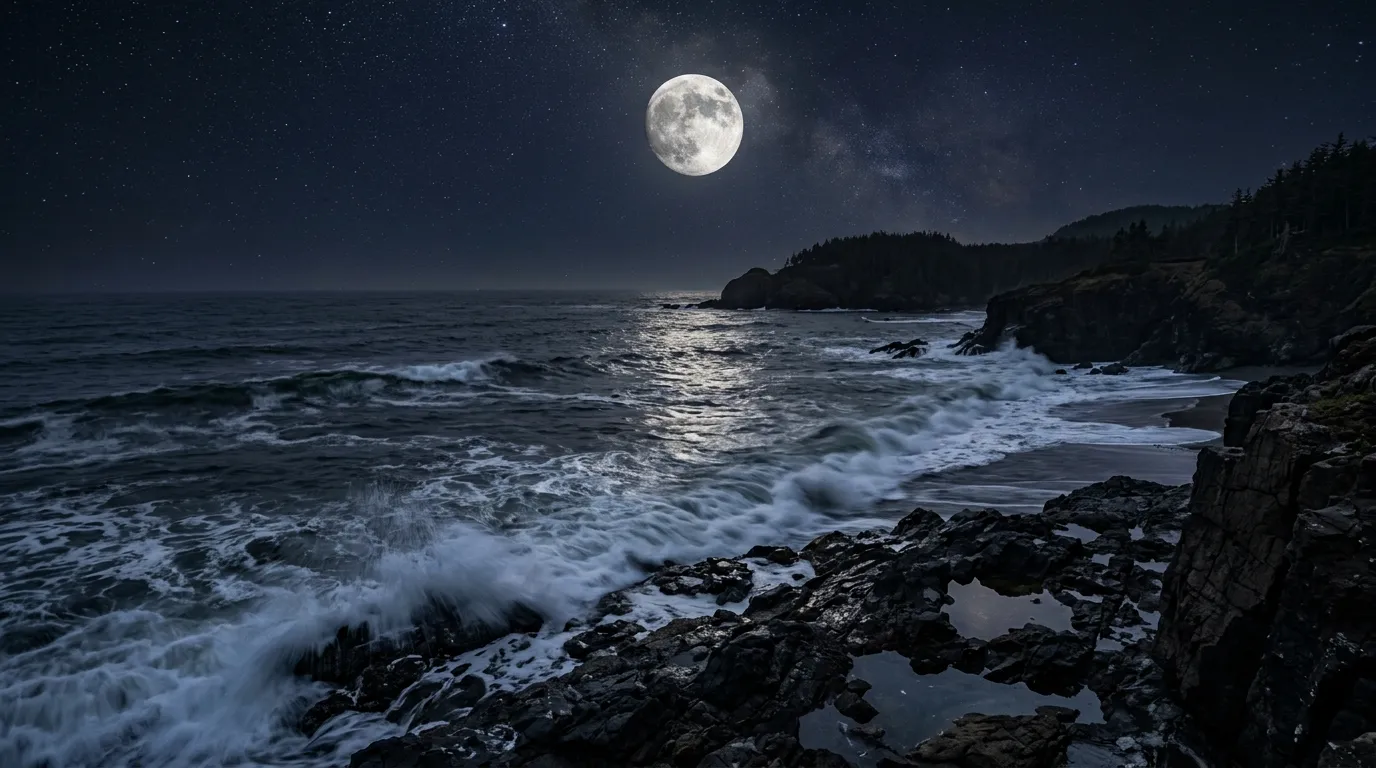
As human activity expands, we inadvertently interfere with the natural lunar signals animals rely on. Growing artificial light pollution obscures natural moonlight. This confuses newly hatched sea turtles, disorients migrating birds, and disrupts the navigation systems of nocturnal insects.
Conservationists and organizations like the World Wildlife Fund now work to create “dark sky” reserves to protect these vital ecological rhythms. Understanding the delicate balance between our planet and its moon helps us make better decisions about coastal development and artificial lighting.
Conclusion
Understanding how-lunar-cycles-affect-earth reveals a deeply interconnected system that makes our planet habitable. From driving the essential ocean currents to guiding fragile sea life and anchoring our climate, the moon acts as our silent, stabilizing partner. Take time tonight to step outside, observe the current lunar phase, and appreciate the immense gravitational work happening right above you.
FAQs
1. How exactly does the moon cause tides on our planet?
The moon exerts a gravitational pull that draws the water in our oceans toward it, creating a bulge on the side of the planet facing the moon. A secondary bulge forms on the opposite side due to the centrifugal force of the planet’s rotation. As we spin through these bulges daily, we experience high and low tides.
2. Why do we experience two high tides a day instead of one?
We experience two high tides because there are two water bulges on the planet at any given time. One bulge faces the moon directly, while the other sits on the exact opposite side of the globe. As the planet completes a full rotation in 24 hours, specific coastal locations pass through both bulges.
3. What would happen to our oceans if the moon disappeared?
If the moon vanished, we would still have tides driven by the sun, but they would be significantly weaker—about 40% of their current strength. This reduction would drastically alter ocean currents, shrink intertidal zones, and severely impact marine ecosystems that depend on nutrient mixing from strong tides.
4. Does the moon affect human behavior or biology?
Despite popular myths linking full moons to erratic behavior, insomnia, or birth rates, extensive scientific research shows no reliable evidence that lunar cycles directly affect human biology or psychology.
5. How do lunar cycles influence coral reefs?
Many coral reefs rely on the moon to coordinate reproduction. They use moonlight intensity, combined with water temperature and tidal height, to synchronize mass spawning events. This simultaneous release of millions of reproductive cells maximizes the chances of successful fertilization and overwhelms potential predators.
6. What is a spring tide and when does it occur?
A spring tide is an exceptionally high and low tide that occurs when the sun, moon, and Earth align. Their combined gravitational forces pull the oceans more strongly. These occur twice a month, specifically during the full moon and new moon phases.
7. How does the moon stabilize our climate?
The moon acts as a gravitational anchor that keeps our planet’s axial tilt stable at roughly 23.4 degrees. This stable tilt ensures consistent, predictable seasons. Without the moon, the planetary axis would wobble erratically, leading to extreme, sudden shifts in global climate and devastating weather patterns.
8. Do land animals rely on the moon?
Yes. Many nocturnal animals use moonlight to navigate, hunt, and forage. For example, certain species of dung beetles use the polarization of moonlight to walk in straight lines, while many bird species time their long-distance migrations to coincide with the bright illumination of a full moon.
9. Why do tides happen 50 minutes later each day?
While our planet takes 24 hours to rotate once on its axis, the moon is simultaneously moving forward in its orbit around us. It takes the planet an extra 50 minutes to “catch up” and realign exactly with the moon’s new position, extending the tidal cycle to 24 hours and 50 minutes.
10. How is light pollution affecting lunar-dependent wildlife?
Artificial light from cities and coastal developments easily washes out natural moonlight. This light pollution confuses animals that rely on lunar cues. Hatchling sea turtles walk toward streetlights instead of the ocean, migrating birds veer off course, and nocturnal insects fail to navigate properly, threatening their survival.