Have you ever looked up at the night sky and wondered why the moon changes its shape from night to night? You are not alone. For thousands of years, humans have tracked the changing face of the moon to measure time, navigate the seas, and plant crops. Understanding what-are-moon-phases unlocks a deeper connection to our solar system and the natural rhythms that govern our planet. In this comprehensive guide, we will explore the science behind these celestial changes, break down each phase in detail, and reveal how you can use this knowledge in your everyday life.
This article provides an in-depth exploration of the moon’s phases. We will cover the astronomical mechanics that cause the moon to change its appearance, detail the eight distinct stages of the lunar cycle, and discuss the rich cultural history associated with our closest celestial neighbor. You will also find a helpful comparison table, practical applications for gardening and astrophotography, common moon-watching mistakes, expert observation tips, and a detailed FAQ section to answer all your lingering questions.
The Science Behind what-are-moon-phases
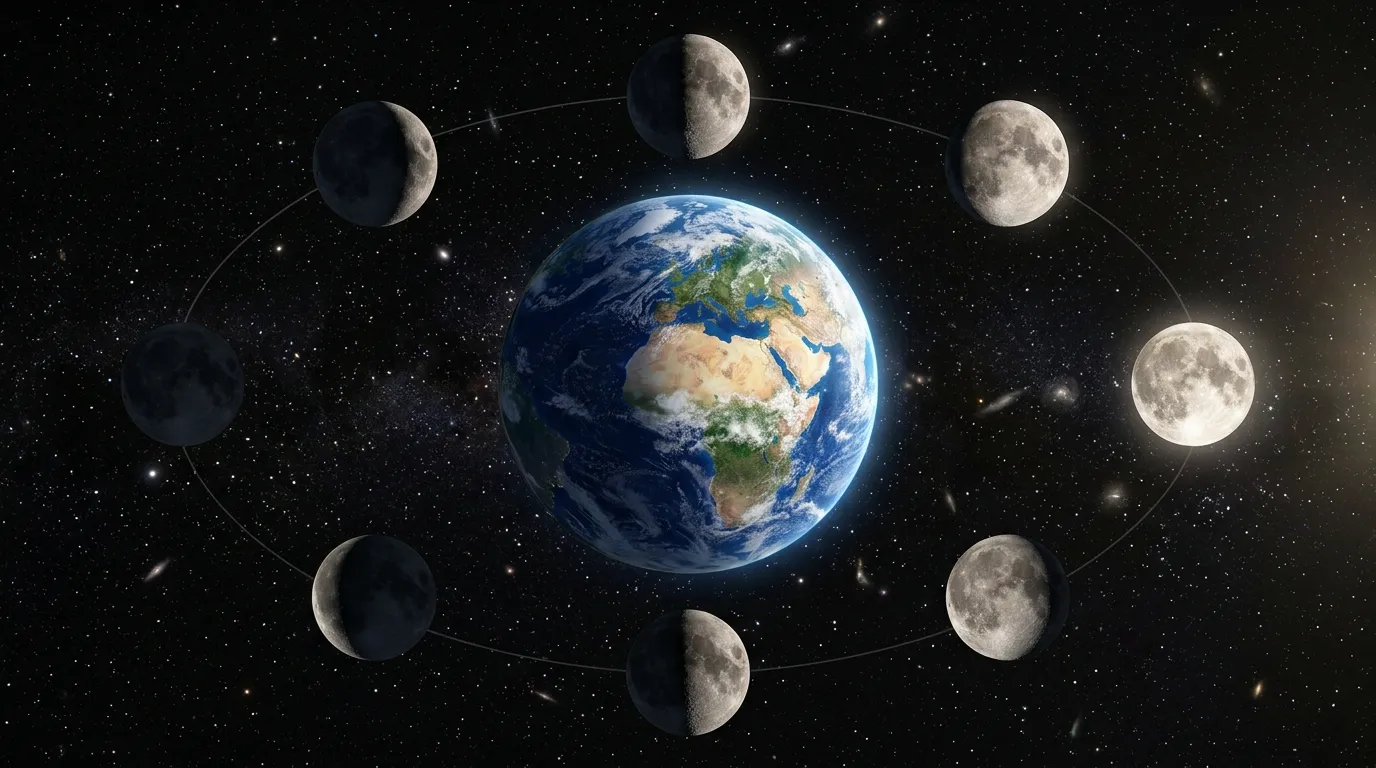
To truly grasp what-are-moon-phases, you first need to understand the relationship between the Earth, the Moon, and the Sun. The moon does not produce its own light. Instead, it acts like a giant mirror in space, reflecting the light of the sun. As the moon orbits the Earth, and as the Earth orbits the sun, the angles between these three bodies constantly change.
It takes the moon about 27.3 days to complete a full orbit around the Earth. However, because the Earth is also moving around the sun during this time, it takes the moon a little longer—about 29.5 days—to complete a full cycle of phases from one new moon to the next. This 29.5-day period is what we call the synodic month, or the lunar cycle.
A fascinating astronomical fact is that the moon is tidally locked to the Earth. This means it spins on its axis at the exact same rate that it revolves around our planet. As a result, we only ever see one side of the moon—the near side. The far side remains permanently hidden from our view, though it still receives sunlight.
The phases we see from Earth simply represent the portion of the moon’s near side that is currently illuminated by the sun. When the moon sits between the Earth and the sun, the side facing us is completely dark. When the Earth sits between the moon and the sun, the near side is fully illuminated. The intermediate phases occur as the moon transitions between these two points.
The 8 Main Moon Phases Explained
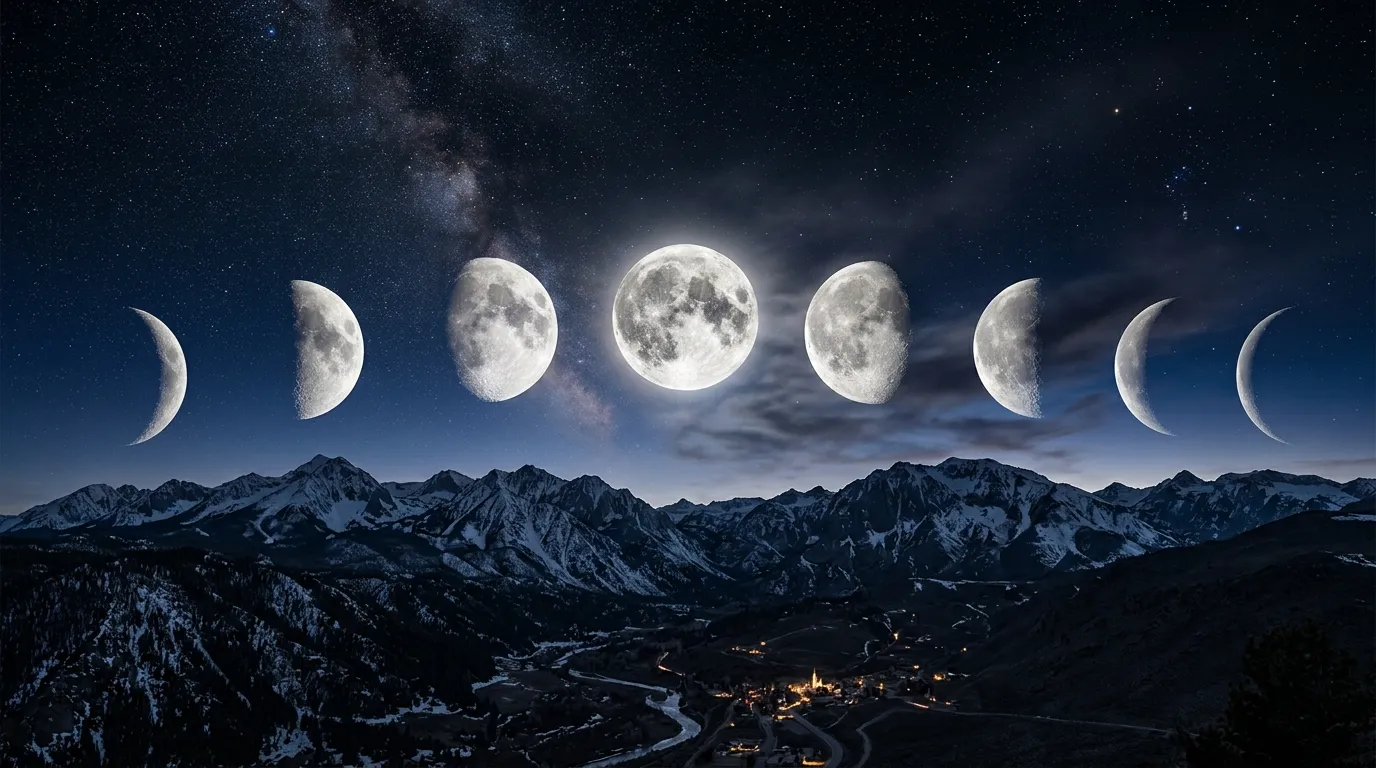
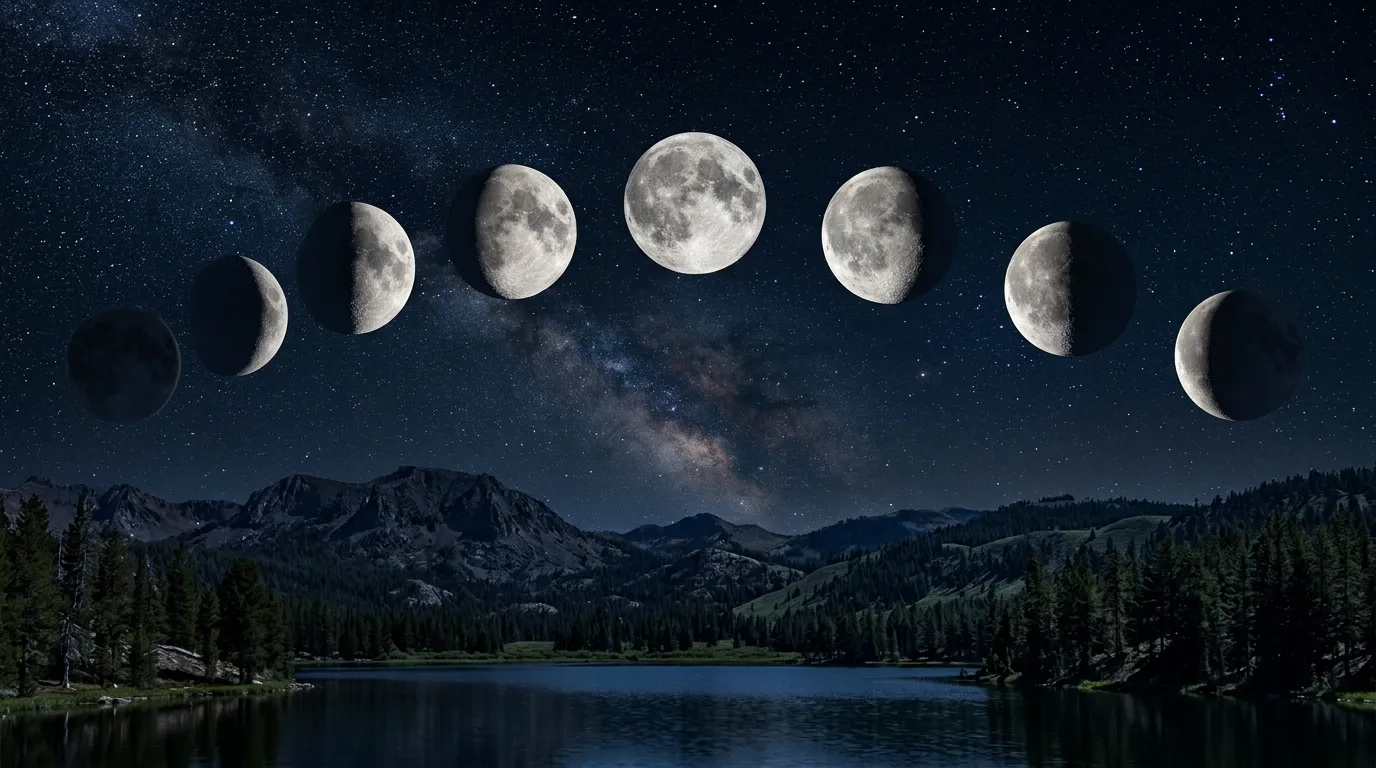
The lunar cycle is broken down into eight distinct phases. These stages happen in a strict, predictable order. Let us explore the scientific mechanics, visual appearance, and general significance of each phase.
1. New Moon
The new moon marks the official beginning of the lunar cycle. During this phase, the moon is positioned directly between the Earth and the sun. Because the sun is shining on the far side of the moon, the side that faces Earth is cast in total shadow.
To the naked eye, the moon is virtually invisible during this time. It rises at sunrise and sets at sunset, tracking right alongside the sun across the daytime sky. For astronomers, the new moon is an incredibly exciting time. With no moonlight to wash out the sky, the new moon offers the absolute darkest conditions for stargazing. It is the perfect time to pull out a telescope and hunt for faint deep-sky objects like galaxies and nebulas. Culturally, the new moon represents a clean slate, a time for fresh starts, and the perfect moment to set new goals.
2. Waxing Crescent
A few days after the new moon, a tiny sliver of light begins to appear on the right side of the moon (in the Northern Hemisphere). This is the waxing crescent phase. The term “waxing” means growing or expanding, while “crescent” refers to the curved, sickle-like shape of the illumination.
At this stage, the moon has moved slightly along its orbit, allowing us to see a small fraction of its sunlit side. The waxing crescent is most easily spotted low in the western sky just after sunset. Interestingly, you can sometimes see the dark portion of the moon faintly glowing during this phase. This phenomenon is called “Earthshine,” which happens when sunlight reflects off the Earth’s oceans and clouds, gently illuminating the dark side of the moon.
3. First Quarter
Roughly a week into the lunar cycle, the moon reaches its first quarter phase. The name can be slightly confusing because the moon appears as a perfect half-circle in the sky. It is called the first quarter because the moon has completed exactly one-quarter of its journey around the Earth.
During this phase, the right half of the moon is illuminated. The sun and the moon sit at a 90-degree angle from the perspective of Earth. The first quarter moon typically rises around noon and sets around midnight, making it highly visible in the afternoon and evening sky. The straight line dividing the light and dark halves of the moon is called the terminator. Viewing the moon through binoculars during this phase is spectacular, as the long shadows cast by the sun highlight the rugged craters and mountain ranges along the terminator line.
4. Waxing Gibbous
As the moon continues its journey, the illuminated portion grows past the halfway mark. This brings us to the waxing gibbous phase. The word “gibbous” comes from a Latin root meaning humpbacked or bulging.
During the waxing gibbous phase, the moon is more than half illuminated but not quite full. The shape appears almost oval or egg-like. This moon rises in the late afternoon and remains in the sky for most of the night. Because of its large illuminated surface, the waxing gibbous moon casts a significant amount of light onto the Earth, brightening the night sky and washing out fainter stars.
5. Full Moon
The full moon is perhaps the most famous and culturally significant phase. This occurs when the Earth sits directly between the sun and the moon. From our vantage point, the entire near side of the moon is bathed in sunlight, creating a brilliant, perfect circle in the night sky.
The full moon rises exactly at sunset and sets exactly at sunrise, dominating the sky for the entire night. Because it sits opposite the sun, it reaches its highest point in the sky around midnight. While the full moon is incredibly beautiful to look at, it is actually the worst time for deep-sky astrophotography, as the intense moonlight drowns out the stars. However, it is an excellent time to take wide landscape photos that feature the moon itself. In many cultures, the full moon is a time of harvest, celebration, and culmination.
6. Waning Gibbous
After the peak of the full moon, the illuminated portion begins to shrink. This marks the start of the waning gibbous phase. “Waning” means decreasing or shrinking.
During this phase, the moon is still more than half-lit, but the darkness begins to creep in from the right side (in the Northern Hemisphere). The waning gibbous moon rises later in the evening and stays visible well into the morning daylight. If you ever see a nearly full moon hovering in the blue sky after sunrise, you are looking at a waning gibbous. This phase represents a time of releasing, letting go, and reflecting on the events of the past few weeks.
7. Third Quarter (Last Quarter)
When the moon completes three-quarters of its orbit around Earth, it enters the third quarter, or last quarter, phase. Similar to the first quarter, the moon appears as a half-circle. However, this time, the left side of the moon is illuminated while the right side is in shadow.
The third quarter moon rises around midnight and sets around noon. It is highly visible in the pre-dawn sky and throughout the morning. Just like the first quarter, the terminator line during the third quarter provides incredible contrast for viewing lunar craters through a telescope.
8. Waning Crescent
The final stage of the lunar cycle is the waning crescent phase. The illuminated portion shrinks to a thin sliver on the left side of the moon. As the days pass, this sliver grows thinner and thinner until it disappears entirely.
The waning crescent rises just before the sun in the early morning hours. It is a quiet, delicate phase that signals the end of the current cycle and the preparation for a new one. Once the waning crescent fades into darkness, the moon returns to the new moon phase, and the 29.5-day cycle begins all over again.
Moon Phases Comparison Table
To help you easily digest what-are-moon-phases, here is a quick reference table comparing the eight stages of the lunar cycle:
|
Phase Name |
Illumination % |
Visual Shape |
Rise Time |
Set Time |
|---|---|---|---|---|
|
New Moon |
0% |
Invisible |
Sunrise |
Sunset |
|
Waxing Crescent |
1% to 49% |
Right-side sliver |
Morning |
Evening |
|
First Quarter |
50% |
Right half illuminated |
Noon |
Midnight |
|
Waxing Gibbous |
51% to 99% |
Right-side bulge |
Afternoon |
After Midnight |
|
Full Moon |
100% |
Full bright circle |
Sunset |
Sunrise |
|
Waning Gibbous |
99% to 51% |
Left-side bulge |
Evening |
Morning |
|
Third Quarter |
50% |
Left half illuminated |
Midnight |
Noon |
|
Waning Crescent |
49% to 1% |
Left-side sliver |
Pre-dawn |
Afternoon |
Note: Illumination sides (left/right) apply to the Northern Hemisphere. In the Southern Hemisphere, the sides are reversed.
Cultural and Historical Significance of the Moon
The phases of the moon have profoundly shaped human history. Long before the invention of mechanical clocks or smartphones, our ancestors looked to the sky to keep time. The 29.5-day lunar cycle is the foundational basis for the concept of a “month.”
Many ancient civilizations, including the Babylonians, Greeks, and Chinese, developed complex lunar calendars to track the passing of time and determine when to plant crops, harvest, and hold religious festivals. Even today, several major world religions, such as Islam and Judaism, rely on lunar calendars to determine the dates of important holidays and observances.
The full moon, in particular, holds immense cultural weight. Native American tribes gave distinct names to the full moons of each month to track the seasons. For example, the Harvest Moon in September signaled the time to gather crops before winter, while the Wolf Moon in January noted the time when hungry wolf packs would howl outside villages.
In mythology and folklore, the moon is often associated with feminine energy, intuition, and the subconscious mind. The changing phases were seen as a reflection of the cycle of birth, life, death, and rebirth. While modern science has demystified the physical mechanics of the moon, its emotional and cultural resonance remains as powerful today as it was thousands of years ago.
Practical Applications: How to Use the Moon Phases
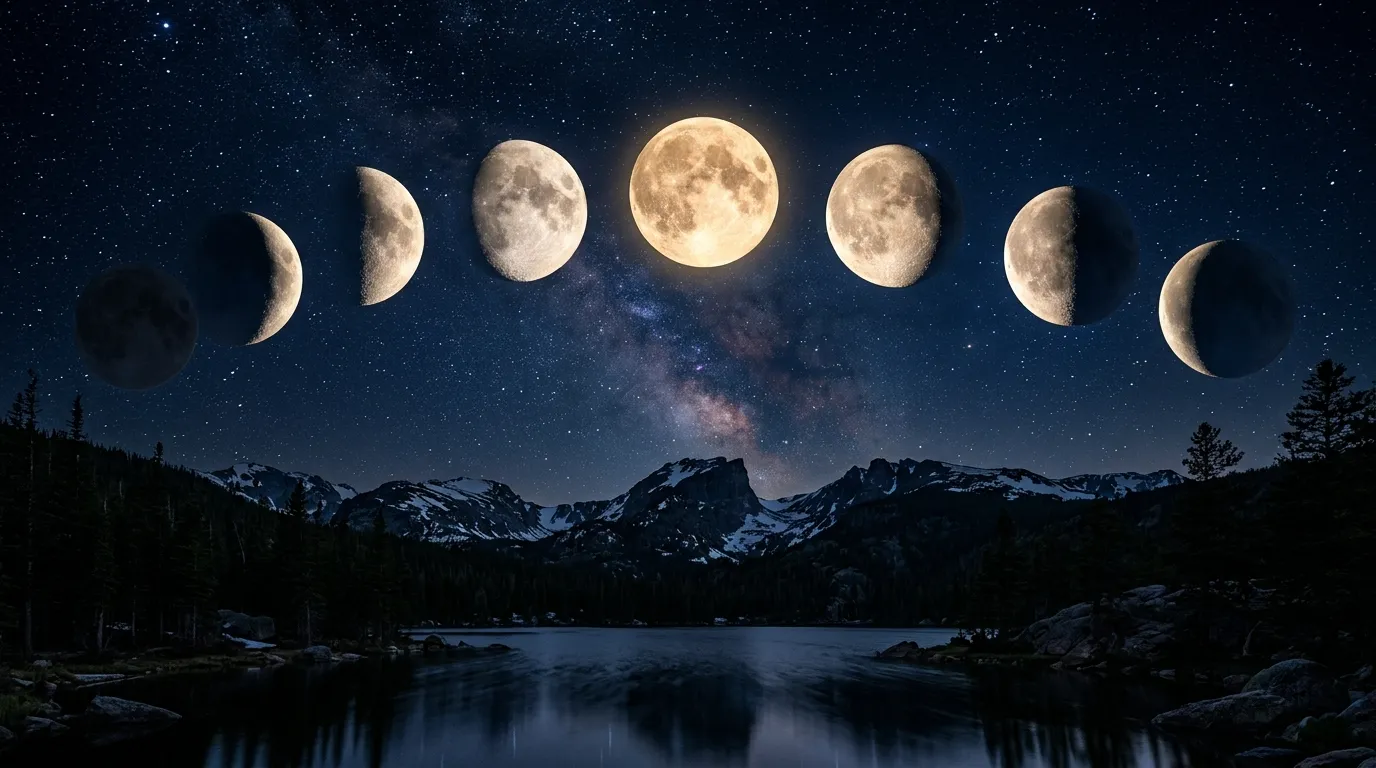
Understanding what-are-moon-phases is not just an academic exercise. You can use this knowledge practically in several areas of your life.
Astrophotography and Stargazing
If you love looking at the stars, the moon is your most important timekeeper. As mentioned earlier, the new moon is the absolute best time for deep-sky observation. If you want to photograph the Milky Way, meteor showers, or faint galaxies, you must plan your sessions around the new moon or the thin crescent phases.
Conversely, if you want to photograph the moon itself, the best times are actually the first and third quarters. While a full moon looks great, the direct overhead sunlight makes the moon’s surface look flat in photographs. During the quarter phases, the sunlight hits the moon at an angle, creating long shadows that make the craters and mountains pop with three-dimensional depth. Websites like NASA provide excellent tracking tools to help you plan your photography sessions.
Gardening by the Moon
Lunar gardening is an ancient practice that aligns the planting and harvesting of crops with the phases of the moon. The theory is that just as the moon’s gravity pulls the ocean tides, it also affects the moisture in the soil.
During the waxing phases (from new moon to full moon), the moonlight increases, and the lunar gravity supposedly pulls moisture closer to the soil surface. This is considered the best time to plant above-ground crops like leafy greens, tomatoes, and beans. During the waning phases, the moonlight decreases, and the gravitational pull shifts. This is viewed as the ideal time to plant root crops like carrots, potatoes, and onions, as the energy is directed downward into the earth.
Lunar Rituals and Wellness
Many people use the lunar cycle as a framework for personal growth and mindfulness. Because the moon represents cycles, it is a great tool for habit tracking and goal setting.
The new moon is traditionally used for setting intentions. It is a time to write down your goals for the month, start a new project, or begin a new habit. As the moon waxes, you take actionable steps toward those goals. The full moon is a time of celebration and gratitude, acknowledging the progress you have made. Finally, the waning phases are used for reflection, decluttering your home, and releasing bad habits before the cycle begins again.
Common Mistakes to Avoid When Observing the Moon
When learning about what-are-moon-phases, beginners often fall into a few common traps. Here is what to avoid:
- Thinking the moon’s phases are caused by Earth’s shadow: This is the most common misconception. The phases are caused by the angle of sunlight hitting the moon, not the Earth blocking the sun. The Earth’s shadow only hits the moon during a lunar eclipse.
- Ignoring daytime moon watching: Many people think the moon is only visible at night. In reality, the moon is visible during the day for about half of the month. Look for the quarter and crescent phases in the morning and afternoon skies.
- Using a telescope during a full moon: Staring at a fully illuminated moon through a telescope without a lunar filter can be painfully bright and lacks the contrast needed to see surface details. Stick to the quarter phases for the best telescope viewing.
- Forgetting hemisphere differences: If you read a guide written in the Northern Hemisphere but live in Australia, the moon will appear reversed. In the Southern Hemisphere, the moon waxes on the left and wanes on the right.
Expert Tips for Moon Watching
To get the most out of your lunar observations, follow these expert tips:
- Use Binoculars First: You do not need an expensive telescope to enjoy the moon. A standard pair of 10×50 binoculars will reveal incredible details, including major craters and the dark basaltic plains known as lunar maria.
- Track the Terminator Line: When observing, focus your attention on the line separating light and dark. The shadows here highlight the dramatic topography of the lunar surface.
- Download an Astronomy App: Apps can tell you exactly when the moon will rise and set in your specific location, and they provide daily updates on the illumination percentage.
- Look for the “Man in the Moon”: The dark patches on the moon’s surface are ancient lava flows. Depending on your culture, people see different shapes in these patches, from a face to a rabbit. Take time to map out these features visually.
Conclusion
Understanding what-are-moon-phases connects you to an ancient rhythm that has guided humanity for millennia. From the quiet darkness of the new moon to the brilliant illumination of the full moon, the lunar cycle offers a predictable and beautiful display of orbital mechanics. Whether you use this knowledge to plan a stargazing trip, plant a garden, or simply appreciate the night sky, the moon is a constant companion in our journey through space. Step outside tonight, look up, and start tracking the majestic cycle of our nearest neighbor.
Frequently Asked Questions (FAQs)
1. What causes the phases of the moon?
The phases of the moon are caused by the changing positions of the Earth, the Moon, and the Sun. As the moon orbits Earth, the sun illuminates different portions of the moon’s near side, creating the visual shapes we see from our planet.
2. How long does a complete lunar cycle take?
A complete cycle, from new moon to new moon, takes approximately 29.5 days. This period is known as a synodic month.
3. Why do we always see the same side of the moon?
The moon is tidally locked to the Earth. This means it rotates on its own axis in the exact same amount of time it takes to orbit the Earth. Because these two motions are synchronized, the same side always faces us.
4. What is the difference between a waxing crescent and a waning crescent?
A waxing crescent occurs right after a new moon and is growing in illumination. In the Northern Hemisphere, it is lit on the right side. A waning crescent occurs just before the next new moon and is shrinking, lit on the left side.
5. Are moon phases different in the Southern Hemisphere?
Yes. While the timing of the phases is exactly the same worldwide, the visual appearance is flipped. In the Southern Hemisphere, the moon waxes from left to right and wanes from right to left.
6. Does the moon really affect human behavior?
While many myths suggest the moon causes chaotic behavior (hence the word “lunatic”), extensive scientific and psychological studies have found no concrete evidence linking the phases of the moon to changes in human behavior.
7. What is a Blue Moon?
A Blue Moon is a calendrical term. It refers to the second full moon occurring within a single calendar month. Because the lunar cycle is 29.5 days and most months are 30 or 31 days, a Blue Moon happens roughly once every two and a half years.
8. What is the best phase for stargazing?
The new moon is the best phase for stargazing. Because the moon is not visible and casts no light, the sky is at its darkest, allowing you to see faint stars, the Milky Way, and deep-space objects clearly.
9. Why isn’t there an eclipse every full moon and new moon?
The moon’s orbit is tilted by about five degrees relative to the Earth’s orbit around the sun. Because of this tilt, the moon usually passes slightly above or below the Earth’s shadow, preventing an eclipse from happening every month.
10. What does the term “gibbous” mean?
The word gibbous comes from a Latin word meaning “humpbacked.” In astronomy, it refers to a moon that is more than half illuminated but not fully illuminated, creating a bulging, oval-like shape in the sky.